China Top Three Phase Motor Manufacturers and Suppliers

Time:2026-11-02 Author:Oliver
0%

Three-phase motors keep pumps turning, fans moving air, and production lines running across factories. Yet buyers often compare only rated power and purchase price. That is not enough. Efficiency, insulation, bearing quality, protection rating, and local service can shape operating costs for years.

The International Energy Agency’s 2011 report, Energy-Efficiency Policy Opportunities for Electric Motor-Driven Systems, estimates that motor systems use 43%–46% of global electricity. Its co-author, energy-efficiency specialist Paul Waide, highlights the scale of the issue: “Electric motor systems account for 43%–46% of global electricity consumption.” The estimate covers motor-driven systems, not motors alone. That distinction matters.

This guide examines three leading Chinese manufacturers and suppliers of Three Phase Motor products. It considers product range, technical documentation, efficiency information, certification claims, customization, and after-sales support. Look for clear nameplate data, published performance figures, and accessible engineering assistance—not just polished catalogs. A supplier’s response to a specific duty cycle can reveal more than a headline specification. Still, rankings are never perfect. Product quality and service may vary by model, factory, and export market, so buyers should verify current documents and test requirements before ordering. The details count.
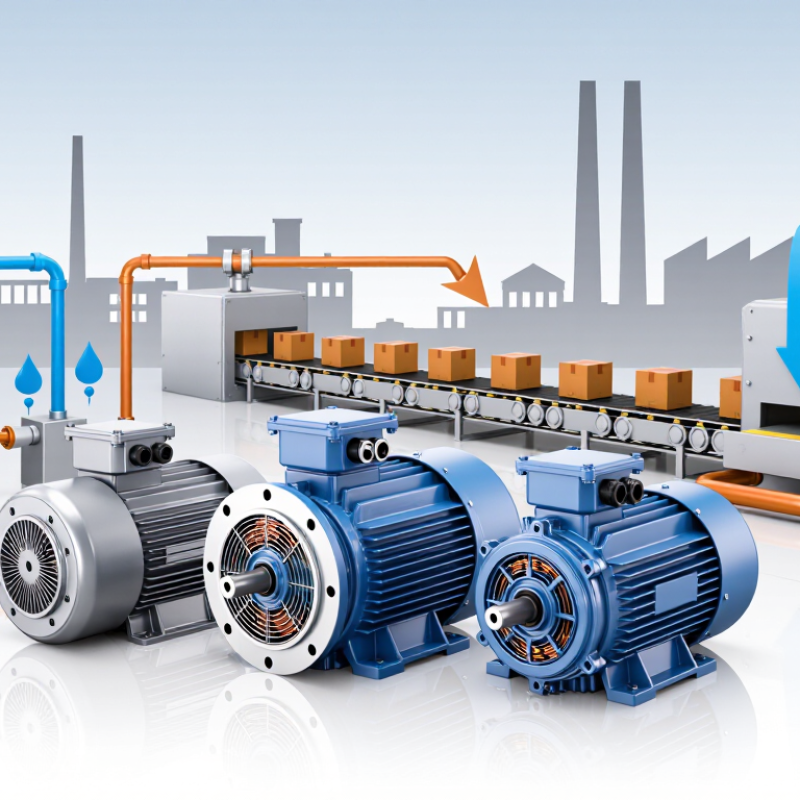
China Top Three Phase Motor Manufacturers and Suppliers

Three-Phase Motor Basics: 380 V, 50 Hz, and 2–8 Poles

Three-phase motors convert electrical power into steady rotary motion for pumps, fans, compressors, and conveyors. In many industrial networks, 380 V refers to the voltage measured between phases, while 50 Hz describes the supply frequency. Always check the motor nameplate before connecting it. The correct star or delta wiring depends on its rated voltages, not just the supply label.

Pole count sets the motor’s theoretical synchronous speed: at 50 Hz, a 2-pole motor runs at 3,000 rpm, a 4-pole at 1,500 rpm, a 6-pole at 1,000 rpm, and an 8-pole at 750 rpm. An induction motor turns somewhat slower under load because of slip. The IEA’s 2011 report on electric motor-driven systems estimated that these systems use about 45% of global electricity. That figure makes correct sizing more than a workshop detail. Yet speed alone does not determine suitability; torque, starting load, cooling, and duty cycle matter too.

Tips: Compare the nameplate voltage and frequency with the site supply. Confirm pole count and expected loaded speed. If the load starts heavily, ask a qualified technician to check the starting method and protection settings. A quick visual check can miss a mismatch.

Efficiency and Standards: GB 18613-2020, IE3, and IEC 60034

For three-phase motors, energy efficiency is more than a catalog claim. China’s GB 18613-2020 sets minimum allowable efficiency values and efficiency grades for specified motor types. Buyers should check that the offered motor’s rated output, pole count, frequency, and operating conditions match the standard’s scope. Numbers need context. An IE3 marking refers to an efficiency class, but it does not guarantee identical performance across every motor design. IEC 60034-30-1 defines efficiency classes for covered motor categories; other parts of the IEC 60034 series address ratings, performance, and testing.

When comparing suppliers, request the test report, nameplate data, and the exact standard edition used. Confirm the declared efficiency at the relevant voltage and frequency, then compare like-for-like models. A small mismatch in frame size or cooling method can change the comparison. In a workshop, a motor running steadily near rated load may use energy differently from one that starts often or runs lightly loaded. That detail is easy to miss. Efficiency labels are useful, but they do not replace application checks, sound installation, or measured operating data. Even careful documentation leaves questions about the real duty cycle; record those assumptions before choosing a motor.

China Top Three Phase Motor Manufacturers and Suppliers — Efficiency and Standards: GB 18613-2020, IE3, and IEC 60034

This timeline highlights key publication and implementation milestones for motor efficiency standards. IEC 60034-30-1 defines IE efficiency classes, including IE3; GB 18613-2020 sets energy-efficiency requirements for relevant motors in China. The dates shown are milestones, not a comparison of motor efficiency or manufacturers.

Supplier Profiles: Wolong, Wannan, and Jiangsu Dazhong

China’s three-phase motor suppliers serve factories, pump systems, compressors, and production lines. Their catalogs may include standard induction motors, higher-efficiency models, and options for different mounting arrangements. The differences are often less visible than a nameplate suggests. Look closely.

One supplier profile may suit buyers seeking broad product coverage and export support. Another may appeal to customers who value established manufacturing experience and practical customization. A third may offer a range suited to common industrial duties. These are useful starting points, not guarantees. A motor’s actual performance depends on its design, operating conditions, and quality controls.

Ask each supplier for rated output, voltage, frequency, insulation class, protection rating, and efficiency data. Request drawings and test records for the exact model, not a similar unit. Check whether the motor can handle frequent starts, dusty surroundings, or variable-speed operation. Small details count. Compare lead times, spare-parts access, and warranty terms in writing. Supplier descriptions can sound reassuring, but site conditions are often messier than a brochure. Verify fit before ordering.

China Three-Phase Motor Suppliers: Product and Specification Guide

Comparison Dimension What to Check Relevant Industry Information
Motor type Confirm whether the application requires an induction motor, synchronous motor, or another motor design. Three-phase squirrel-cage induction motors are widely used in industrial equipment because of their robust construction and straightforward operation.
Rated output and speed Compare rated power, rated speed, starting requirements, and the machine’s load profile. Output and speed are model-specific. Induction-motor speed depends on supply frequency and the number of magnetic poles; actual operating speed is lower than synchronous speed under load.
Voltage and frequency Match the motor nameplate ratings to the available supply and the intended connection. Voltage and frequency configurations vary by market and application. A motor should be selected for the supply conditions stated on its nameplate or technical datasheet.
Energy efficiency Request the declared efficiency class and test information for the specific motor model. IEC 60034-30-1 defines efficiency classes for covered line-operated AC motors. Applicability depends on motor design, rating, and other standard conditions.
Enclosure protection Check the IP rating against exposure to dust, water, and the installation environment. IEC 60034-5 classifies the protection provided by electrical-machine enclosures. An IP rating does not, by itself, establish suitability for every harsh or hazardous environment.
Mounting arrangement Confirm shaft orientation, foot or flange mounting, dimensions, and compatibility with the driven equipment. IEC 60034-7 provides classifications for construction and mounting arrangements. The exact frame and mounting details should be verified on the dimensional drawing.
Insulation and temperature rise Ask for the insulation-system class, ambient conditions, and permitted temperature rise. Thermal classes used for electrical insulation include Class B (130°C), Class F (155°C), and Class H (180°C). These class temperatures are not, on their own, a guarantee of a motor’s operating temperature or service life.
Duty and operating conditions Specify continuous or intermittent operation, starts per hour, load variation, and surrounding temperature. IEC duty types describe operating patterns; S1 denotes continuous running duty. The required duty should be stated when requesting a quotation or evaluating a model.
Variable-speed operation If a variable-frequency drive will be used, confirm drive compatibility and any required cooling or bearing provisions. Drive operation can affect motor heating, insulation stress, and low-speed cooling. Suitability should be confirmed for the motor, drive, speed range, and load together.
Verification documents Request the datasheet, nameplate details, outline drawing, test records, and applicable conformity documents. Documents should correspond to the exact model and rating being offered. Standards references and certificates should be checked for scope, validity, and applicability to the destination market.

Note: This guide summarizes general three-phase motor selection criteria; it does not assign specifications or performance claims to any individual supplier. Confirm all ratings and compliance details against the selected model’s documentation.

Comparing Rated Power, IP55 Protection, and S1 Duty Ratings

When comparing three-phase motor suppliers, start with rated power, but do not treat kilowatts as a complete specification. Match the motor’s output to the machine’s measured load, starting method, and operating hours. A pump that runs steadily needs a different selection check from a conveyor with frequent starts. Allow for real operating conditions; a generous oversize can also reduce efficiency at partial load.

The International Energy Agency’s 2011 report, Energy-Efficiency Policy Opportunities for Electric Motor-Driven Systems, estimates that these systems use about 45% of global electricity. That scale makes efficiency and duty selection practical concerns, not brochure details. Check each supplier’s rated power alongside efficiency data and the intended supply conditions. Then verify the duty rating. S1 means continuous operation at a constant load long enough to reach thermal equilibrium under the specified conditions, as defined in IEC 60034-1. Continuous duty matters.

IP55, classified under IEC 60529, indicates protection against harmful dust ingress and water jets. It does not mean the motor is waterproof or suitable for every washdown environment. Compare the enclosure, cooling arrangement, and installation exposure, especially near spray, fine dust, or restricted airflow. One detail is easy to miss: ambient temperature and altitude can affect usable output. Ask suppliers for the applicable derating information and test documentation. A rating alone is not the whole story.

Motor Selection: Load, Starting Torque, and Variable-Frequency Drives

China Top Three Phase Motor Manufacturers and Suppliers

Motor Selection: Load, Starting Torque, and Variable-Frequency Drives

Choosing a three-phase motor starts with the driven load, not just its rated power. A pump may need modest torque once running, while a loaded conveyor can demand strong starting torque. Record the actual load, start frequency, acceleration time, and daily operating hours. A nameplate helps, but it can mislead if the machine rarely runs near its rated point. The International Energy Agency’s 2011 report, Energy-Efficiency Policy Opportunities for Electric Motor-Driven Systems, estimates motor-driven systems use about 46% of global electricity. That makes careful selection worthwhile.

Check whether the motor can start the load without overheating or tripping protection. For high-inertia equipment, confirm starting torque and acceleration requirements with the motor supplier. A variable-frequency drive can ramp speed and reduce direct-on-line starting current. It can also match pump or fan speed to demand. But a drive does not guarantee savings; results depend on the load profile, control settings, and installation. Poorly configured systems can add losses. This is easy to overlook.

Tips: Share measured operating data with suppliers, not only motor size. Ask for starting-current and torque curves, drive compatibility, and expected efficiency at typical loads. If measurements are unavailable, say so; estimates deserve review.

FAQS

Is rated power enough to choose a three-phase motor?

No. Match the motor’s output to measured load, starting method, and daily operating hours. A larger motor can waste energy at partial load.

What does an S1 duty rating mean?

S1 describes continuous operation at a constant load until thermal equilibrium is reached under specified conditions. Check that the motor suits the machine’s actual running schedule.

Does IP55 mean a motor is waterproof?

No. IP55 indicates protection against harmful dust ingress and water jets. It does not guarantee suitability for every washdown area.

What should I check for a conveyor that starts often?

Record its load, start frequency, and acceleration time. Confirm starting torque and current with the supplier. Frequent starts matter.

Can a variable-frequency drive reduce energy use?

It can help match pump or fan speed to demand. Savings depend on load profile, settings, and installation. A drive alone is no guarantee.

Why do ambient temperature and altitude matter?

Both can affect usable motor output. Ask for derating information, especially for a hot plant room or a high-altitude site.

What information should I share when comparing motors?

Provide measured operating data, typical load, supply conditions, and daily hours. If measurements are missing, say so. Estimates need review.

What documents can help verify a motor’s suitability?

Request efficiency data, starting-current and torque curves, drive compatibility details, and relevant test documentation. A rating alone tells only part of the story.

Conclusion

This guide introduces the key fundamentals of a Three Phase Motor, including common 380 V, 50 Hz configurations and designs with two to eight poles. It explains how pole count affects speed and why efficiency requirements matter, with an overview of GB 18613-2020, IE3 efficiency levels, and IEC 60034 standards. Buyers can use these points to understand product specifications and compare suppliers according to their manufacturing capabilities and application support.

When evaluating motors, consider rated power alongside IP55 protection and S1 continuous-duty ratings, while checking that specifications match the operating environment. Selection should begin with the driven load and required operating speed, then account for starting torque and expected working conditions. For applications with changing speed requirements, a variable-frequency drive may provide useful control, provided the motor and drive are suitably matched. Comparing these factors helps users make a practical choice for reliable, efficient operation.

Oliver

Oliver

Oliver is a seasoned marketing professional with a wealth of expertise in driving brand awareness and engagement. With a deep understanding of our company's product offerings, he consistently delivers high-quality content that enriches our professional blog. His insights not only shed light on......