Choosing the right Nema Motor can determine whether a machine runs smoothly or struggles under pressure. The decision involves more than matching horsepower to a catalog number. Frame size, voltage, speed, torque, duty cycle, and mounting style must work together.
Real operating conditions matter.
A motor running beside a dusty conveyor faces different demands from one installed inside a clean laboratory. Heat, moisture, vibration, and frequent starts can shorten motor life when overlooked. Experienced technicians usually begin with the driven load, not the motor label. They check the starting torque, continuous load, available power, and required operating speed. Small details matter. A shaft diameter or mounting mismatch can delay installation and increase costs.
This guide presents seven practical tips for selecting a Nema Motor with greater confidence. It examines application requirements, enclosure protection, efficiency, controls, service factors, and manufacturer support. Reliable selection also requires careful comparison of technical data sheets, not assumptions based on familiar brands. Even experienced buyers get this wrong. A motor that appears oversized may waste energy, while an undersized model may overheat during peak demand. The recommendations reflect common engineering practice, but every installation still deserves site-specific verification. Specifications can be incomplete. Measurements can be imperfect. That is why reviewing the load profile with a qualified motor specialist remains valuable before purchase. The right choice should fit today’s machine and leave reasonable room for safe, practical operation tomorrow.
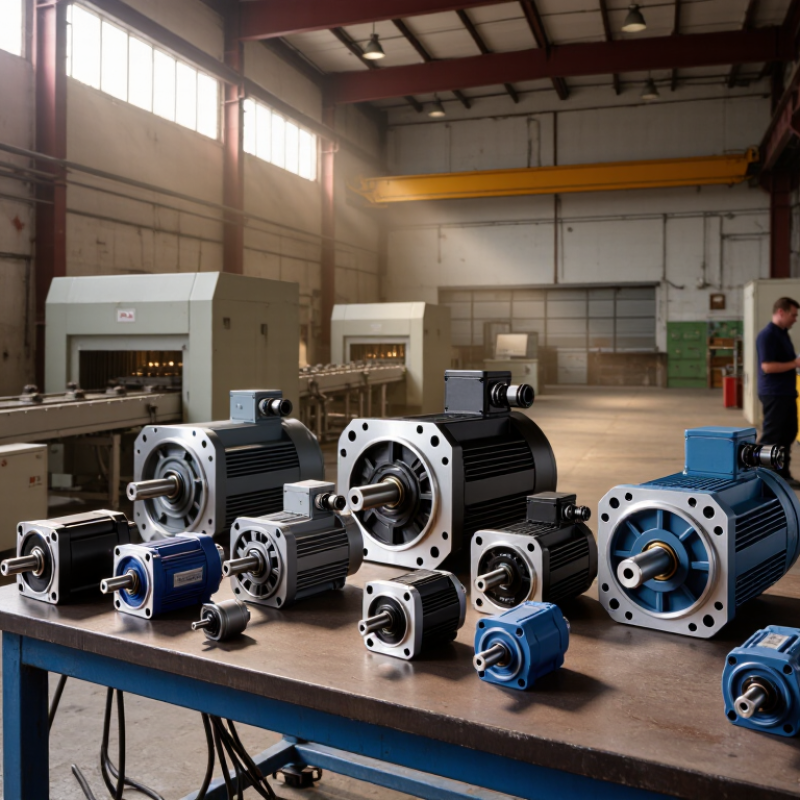
Choosing the right NEMA motor starts with the load, not the horsepower label. Measure the torque required during normal operation and startup. Then record the operating speed at the shaft. A conveyor may need steady torque, while a fan often demands rapidly increasing torque at higher speeds.
Use the relationship horsepower = torque × speed ÷ 5252 when torque is measured in pound-feet and speed in revolutions per minute. This calculation gives a useful starting point. It does not complete the selection. Check the motor’s torque-speed curve, acceleration time, duty cycle, and efficiency. A motor that runs well at 1,750 rpm may struggle when starting a heavy drum at low speed. That detail is easy to miss.
Leave practical margin, but avoid excessive oversizing. An oversized motor can operate inefficiently and may increase starting stress on the driven equipment. Confirm the required continuous torque, peak torque, and available voltage before comparing frame sizes. Also consider ambient temperature, dust, moisture, and the installation altitude. These conditions can reduce usable output.
Field measurements are valuable. A clamp meter, tachometer, and recorded startup behavior can reveal problems that calculations hide. Still, measurements are not perfect. Changing material weight or belt tension can alter the load next month. Review the assumptions with a qualified engineer, especially when braking, frequent reversing, or high-inertia loads are involved. Horsepower matters, but torque at the actual speed matters more.
7 Tips for Choosing the Right NEMA Motor
Match the frame before comparing horsepower. NEMA MG 1 provides standardized frame dimensions, including shaft height, mounting holes, and shaft extension. These measurements support direct replacement, but the frame number alone is not enough. Check the shaft diameter, keyway, shaft length, and bolt-hole spacing with a caliper. A small mismatch can create coupling vibration or force expensive alignment work. In field replacement work, I have learned this the hard way.
Tip 1: Photograph the nameplate and measure the old motor before ordering. Record voltage, frequency, full-load current, speed, enclosure, duty, and service factor. The U.S. Department of Energy reports that motor systems can represent more than 70% of industrial electricity use. Correct sizing therefore affects both reliability and operating cost. Tip 2: Confirm the replacement’s centerline height and mounting configuration. Foot-mounted, flange-mounted, and vertical motors are not interchangeable without engineering review. Tip 3: Compare the shaft extension carefully. Matching the diameter but missing the length is a common, costly mistake.
Tip 4: Check the driven equipment’s actual load, not only its original motor rating. Tip 5: Verify rotation, bearing arrangement, and environmental protection. Tip 6: Review efficiency data under the machine’s real load. The International Energy Agency identifies electric motors as major global electricity consumers, making efficiency selection important. Tip 7: Ask for certified dimensional drawings and test documentation. I still recheck drawings against the installed motor. Paper dimensions can be correct, yet site conditions may differ. That final inspection is not glamorous, but it prevents avoidable downtime.
| NEMA Frame | Shaft Center Height, H (in) |
Standard Shaft Diameter, D (in) |
Typical Mounting Type | Replacement Check |
|---|---|---|---|---|
| 143T | 3.50 | 1-1/8 | Foot-mounted | Confirm A, B, C, D, and E dimensions before ordering. |
| 145T | 3.50 | 1-1/8 | Foot-mounted | The same shaft size does not guarantee the same bolt-hole spacing. |
| 182T / 184T | 4.50 | 1-3/8 | Foot-mounted | Check the frame suffix and mounting-hole pattern for a drop-in fit. |
| 213T / 215T | 5.25 | 1-5/8 | Foot-mounted | Measure the shaft extension and keyway, not only the shaft diameter. |
| 254T / 256T | 6.25 | 1-7/8 | Foot-mounted | Verify the base length, base width, and shaft extension for coupling alignment. |
| 284T / 286T | 7.00 | 2-1/8 | Foot-mounted | Confirm the enclosure, frame length, and terminal-box position. |
| 324T / 326T | 8.00 | 2-3/8 | Foot-mounted | Allow clearance for the larger frame and verify the existing foundation. |
| 364T / 365T | 9.00 | 2-5/8 | Foot-mounted | Check mounting dimensions, overall length, and driven-equipment alignment. |
| 404T / 405T | 10.00 | 2-7/8 | Foot-mounted | Confirm foundation, shaft loading, and available ventilation space. |
| 444T / 445T | 11.00 | 3-1/8 | Foot-mounted | Use a complete dimensional drawing before approving a direct replacement. |
Dimensions are nominal reference values in inches for common NEMA T-frame motors. A frame number and shaft diameter alone are not sufficient to guarantee a direct replacement; always compare the manufacturer's certified dimensional drawing and the existing installation.
Service factor 1.15 is not a permanent horsepower upgrade. Under NEMA MG 1, it indicates a motor may handle 15% above rated load under specified conditions. Those conditions include correct voltage, frequency, ambient temperature, and installation. A 10 hp motor, therefore, may tolerate 11.5 hp briefly. It should not run there every day.
Short-term overloads can occur during conveyor starts, pump surges, or temporary material jams. Even then, check current, winding temperature, acceleration time, and voltage drop. A thermal camera can reveal trouble before insulation damage becomes visible.
The U.S. Department of Energy’s 2021 Motor Systems Market Assessment reports that motor-driven systems consume about 57% of U.S. manufacturing electricity. Small efficiency or reliability errors can become expensive across many operating hours.
Choose the continuous duty rating for the real load, not the service factor. NEMA MG 1 also warns that operation at service-factor load can reduce efficiency and shorten motor life. In practice, oversized motors may run poorly at light load, while undersized motors overheat repeatedly.
That judgment is not always clean. Measure the load profile for several cycles, review the motor’s temperature-rise data, and confirm the overload relay setting.
A 1.15 service factor is useful breathing room. It is not permission to ignore correct sizing.
Choosing a NEMA motor starts with the application, not the catalog headline. Check horsepower, voltage, frequency, frame size, enclosure, and service factor. Then compare nominal efficiency at the required load. A larger motor may look efficient, yet operate poorly when lightly loaded. That mistake can increase operating costs.
DOE test conditions create a common comparison point. Review the rated-load efficiency measured under the required test procedure. Check the test method, input voltage, frequency, ambient temperature, and winding temperature assumptions. NEMA Premium motors generally meet higher efficiency levels than standard designs, but the label alone is not enough. Ask for certified performance data. Also examine power factor, locked-rotor current, and full-load current. These values affect cables, starters, and protection equipment.
Field experience often reveals the awkward details. A motor can pass a laboratory comparison but struggle in a dusty, hot room. Keep ventilation openings clear and verify alignment before commissioning. Use a power analyzer to compare actual input power with the published rating. I have seen installation losses hide expected savings. Recheck the calculation. Consider annual running hours, electricity rates, maintenance access, and the cost of a compatible drive. One overlooked issue: efficiency changes with load. Select a motor that operates near its practical duty point, not merely its maximum rating.
Choosing the right NEMA motor begins with its enclosure, not only its horsepower. The enclosure must match the motor’s environment, operating load, and maintenance conditions.
ODP, or Open Drip-Proof, motors allow cooling air to move through the housing. They suit clean, dry indoor spaces where dripping liquid is unlikely. They are often economical, but dust and humidity can shorten their service life. That limitation is easy to underestimate.
TEFC, or Totally Enclosed Fan-Cooled, motors use an external fan and a sealed frame. They work well in dusty workshops, outdoor equipment, and general industrial areas. Check the motor’s ambient temperature rating and airflow clearance. A blocked fan cover can cause overheating, even when the enclosure appears suitable. TEFC does not mean unlimited water protection. Frequent washdown may require a more suitable enclosure and certified protection level.
Explosion-proof motors are designed for locations where flammable gases, vapors, or dust may exist. Their construction helps prevent an internal ignition from igniting the surrounding atmosphere. Selection must match the hazardous-location classification, substance group, temperature class, and local electrical requirements. Never choose one by appearance alone. In field reviews, the biggest error is treating “explosion-proof” as a universal safety label. It is not. Confirm the area classification with a qualified engineer, and review cable entries, seals, cooling space, and maintenance procedures before installation.
Small details matter.
Match the frame dimensions before comparing horsepower. Check shaft height, mounting holes, and shaft extension. Frame numbers alone can mislead.
Measure shaft diameter, keyway, shaft length, and bolt-hole spacing. Use a caliper. A tiny mismatch may cause vibration.
Photograph the nameplate before removal. Record voltage, frequency, current, speed, enclosure, duty, and service factor. Details matter.
Not automatically. Confirm centerline height and mounting configuration. Vertical and horizontal arrangements may require engineering review.
Matching diameter is not enough. The shaft may be too short for the coupling. That mistake can create costly alignment work.
Measure the driven equipment’s actual load. Do not rely only on the original motor rating. Load conditions can change over time.
It provides limited overload capacity under specified conditions. A 10 horsepower motor may tolerate 11.5 horsepower briefly. Not every day.
Review current, winding temperature, acceleration time, and voltage drop. A thermal camera can reveal rising heat. I would still recheck the load profile.
Efficiency may change at light or partial load. An oversized motor can perform poorly. An undersized motor may overheat repeatedly.
Confirm rotation, bearings, enclosure, duty, and overload settings. Compare certified drawings with the installed motor. Paper dimensions are not always site reality.
Choosing the right Nema Motor starts with defining the application’s load torque, operating speed, duty cycle, and starting requirements. These details help determine the correct horsepower without oversizing or creating inefficient performance. For a direct replacement, verify that the NEMA frame dimensions, mounting pattern, shaft diameter, and shaft length match the existing motor. Also consider the service factor carefully: a 1.15 rating is intended for limited, short-term overload capacity and should not replace proper motor sizing.
Efficiency and enclosure design are equally important. Compare NEMA Premium efficiency levels under consistent DOE test conditions to understand energy use and operating costs. Select an enclosure based on the environment, such as ODP for clean, dry locations, TEFC for protection from dust and moisture, or an explosion-proof design where hazardous conditions require it. Finally, review voltage, phase, frequency, controls, maintenance needs, and ambient temperature before purchase. A complete evaluation ensures reliable operation, safety, and long-term value.
