A Permanent Magnet Motor can deliver high torque in a compact package, but its real value depends on the job it must perform. In an electric vehicle, a factory conveyor, or a precision servo axis, buyers may prioritize different things. Efficiency matters. So do thermal limits, noise, control compatibility, and service life. A motor that performs well on a laboratory test bench may behave differently in a dusty plant or under repeated heavy loads.
This guide introduces ten manufacturers active in the permanent magnet motor market. It considers practical factors such as product range, engineering capability, customization, manufacturing footprint, and support availability. These points can help readers compare suppliers, but they do not make one company the best choice for every project. Details matter. Specifications should be checked against the actual duty cycle, operating temperature, required speed, and drive system. Published efficiency figures also need context; test conditions are not always comparable. That is an imperfect part of any industry overview, and it deserves a closer look. The companies featured here offer different strengths, from established industrial portfolios to specialized designs. Use the list as a starting point, then review technical documents and speak with each manufacturer before making a purchase decision.
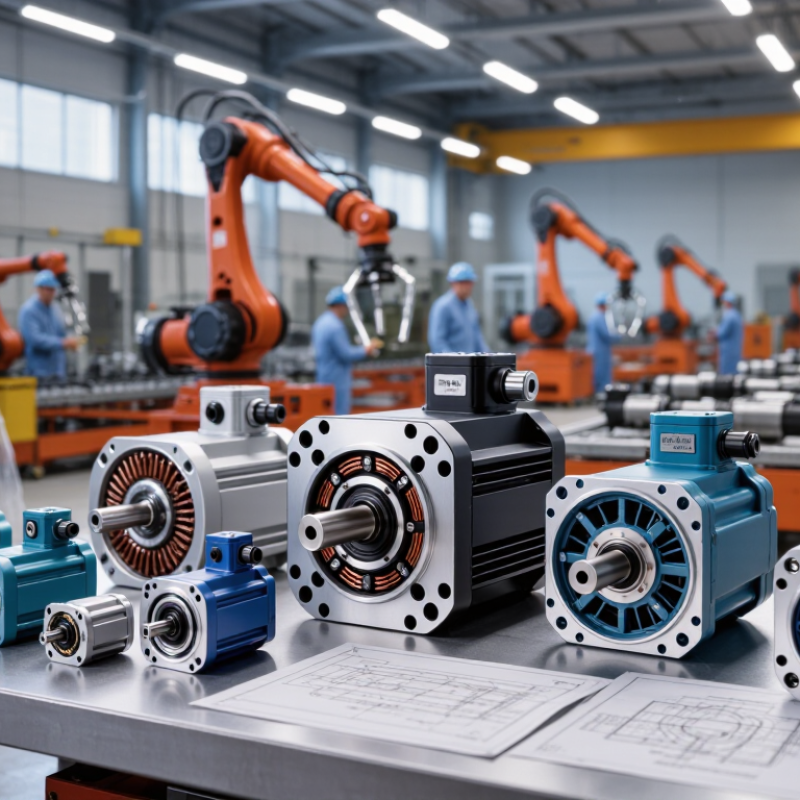
A permanent magnet motor creates its rotor’s magnetic field with magnets fixed to the rotor, rather than an energized rotor winding. When current flows through stator windings, it produces a rotating magnetic field. The rotor follows this field, and their interaction produces torque. Simple idea. In many designs, an electronic drive switches current in sequence to keep the magnetic fields properly aligned. Sensors, or sensorless control, help estimate rotor position. The exact method depends on the motor and its application. For practical design, the motor and controller work best as a matched system.
Permanent-magnet synchronous motors and brushless DC motors both use rotor magnets, though their control methods and back-EMF waveforms can differ. With no rotor winding current, some electrical losses are reduced, but the motor is not loss-free. Stator copper still warms, and bearings and airflow matter. Heat matters. Excessive operating temperatures can weaken magnets, so cooling and material choice deserve careful attention. On a test bench, a well-matched motor may accelerate smoothly and sound quiet; under the wrong load, it can vibrate or run inefficiently. Efficiency figures alone do not tell the whole story. In hindsight, it is easy to treat magnet strength as the main design answer, when temperature, control timing, and load may matter just as much.
This brand-free comparison summarizes ten common permanent-magnet motor designs and manufacturing focus areas. The entries describe technologies, not a ranked list of named companies. Performance varies with motor size, materials, cooling, control method, and operating conditions.
| No. | Motor design or manufacturing focus | Operating principle | Common applications | Key design consideration |
|---|---|---|---|---|
| 1 | Interior permanent-magnet synchronous motor (IPMSM) | Magnets are embedded in the rotor. Rotor saliency can add reluctance torque to magnet-generated torque. | Electric-vehicle traction, compressors, and industrial drives | Offers a broad control range, but rotor design and control are comparatively complex. |
| 2 | Surface-mounted permanent-magnet synchronous motor (SPMSM) | Magnets are mounted on the rotor surface; the stator’s rotating magnetic field synchronizes with the rotor. | Servo drives, pumps, fans, and precision machinery | Typically provides high torque density; magnet retention and field-weakening range need attention. |
| 3 | Brushless DC motor (BLDC) | Permanent magnets form the rotor, while electronic commutation switches current in the stator windings. | Appliances, small pumps, power tools, and cooling fans | Requires an electronic controller; commutation method affects torque ripple and acoustic noise. |
| 4 | Axial-flux permanent-magnet motor | Magnetic flux travels mainly parallel to the shaft, between disc-shaped rotor and stator structures. | Compact traction systems, direct-drive equipment, and specialized machinery | Can achieve a short axial package, while thermal management and mechanical tolerances are important. |
| 5 | Radial-flux permanent-magnet motor | Magnetic flux crosses the air gap mainly in the radial direction between cylindrical rotor and stator. | Industrial drives, vehicles, appliances, and general-purpose machinery | A widely used geometry with established manufacturing methods; output depends strongly on cooling and electromagnetic design. |
| 6 | Direct-drive permanent-magnet motor | A low-speed motor drives the load directly, avoiding a separate gearbox in the power path. | Turntables, elevators, wind-energy systems, and large rotating machinery | Eliminating gearing can reduce mechanical parts, but the motor may need a larger diameter or more active material. |
| 7 | High-speed permanent-magnet motor | A permanent-magnet rotor operates at high rotational speed under inverter control. | Turbo compressors, high-speed spindles, and compact turbomachinery | Rotor strength, bearing selection, balancing, and heat removal are critical. |
| 8 | Low-voltage permanent-magnet motor | Electronic control energizes the stator windings from a low-voltage DC supply. | Battery-powered equipment, mobility devices, and small automation systems | High current can increase conductor and connection losses, so wiring and thermal design matter. |
| 9 | Permanent-magnet servo motor | A permanent-magnet synchronous motor works with a feedback device and servo drive for controlled motion. | Robotics, CNC machinery, packaging, and automated production lines | Designed for accurate torque, speed, or position control; system performance also depends on feedback and tuning. |
| 10 | Ferrite-magnet permanent-magnet motor | Ferrite magnets provide rotor excitation, with electromagnetic design adapted to their magnetic properties. | Cost-sensitive drives, appliances, and selected vehicle or industrial applications | Ferrite avoids rare-earth magnet materials but generally requires careful design to meet size and torque targets. |
Magnets fixed to the rotor create its magnetic field. Current in the stator windings creates a rotating field that produces torque.
An electronic drive switches current in sequence to maintain magnetic alignment. Sensors or sensorless controls can estimate rotor position.
No. Stator windings still heat up, and bearings and airflow affect performance. Less rotor winding loss does not mean zero loss.
Excessive heat can weaken the rotor magnets. Cooling channels and suitable materials matter, especially during continuous operation.
Both use rotor magnets, but their control methods and back-EMF waveforms can differ. The right choice depends on the application.
Review efficiency maps, torque-speed curves, thermal test results, warranty terms, delivery capacity, and replacement-part access. A headline rating is not enough.
Cooling paths, winding arrangements, rotor balance, and encoder options can affect heat, vibration, and control. Small details matter.
Match its ratings and control compatibility to the load and duty cycle. Ask whether test results reflect your operating conditions.
Not really. A supplier suited to pumps may not fit a vehicle project. Published tests may also use different conditions, so comparisons deserve a second look.
This article explains what a Permanent Magnet Motor is and how it converts electrical energy into motion using magnetic fields created by permanent magnets. It outlines the basic operating principles, including how the interaction between the magnets and the motor’s electrical windings produces torque. It also surveys common applications across industries and the broader market landscape, highlighting the growing demand for efficient, compact, and reliable motor technologies.
The article then introduces criteria for evaluating manufacturers, such as engineering expertise, product range, performance, customization, quality control, and customer support. It presents an overview of ten leading manufacturers worldwide without focusing on any single brand, and compares their technologies, products, and areas of expertise. Together, these sections offer readers a practical framework for understanding the market and identifying the capabilities that matter when assessing Permanent Magnet Motor suppliers.

 MicroDyn Motor