China Top 10 Precision Motor Manufacturers for Buyers

Time:2026-09-27 Author:Ethan
0%

Choosing a Precision Motor is not simply a matter of comparing prices or headline specifications. A motor that performs well in a laboratory may behave differently inside a compact machine, under repeated starts, or near a heat-producing drive. Buyers need to match motor design with the actual workload. Small details matter.

This guide introduces ten manufacturers for buyers to evaluate across industrial automation, medical equipment, robotics, and other demanding applications. It considers factors such as torque and speed range, positioning accuracy, motor dimensions, feedback options, thermal behavior, and customization support. A drawing with mounting points and shaft dimensions can reveal fit issues before a sample reaches the production line. So can a clear explanation of duty cycle and operating temperature.

The comparison is intended as a practical starting point, not a universal ranking. Manufacturer capabilities, product availability, and delivery schedules can change, while a strong supplier in one application may not suit another. Ask for current datasheets, test conditions, quality documentation, and references relevant to your industry. Confirm that quoted performance applies to the intended controller, load, and environment. Fit comes first.

Procurement teams should also discuss service access, replacement parts, communication during engineering changes, and realistic lead times. These details are less visible than torque figures, yet they can affect project schedules and long-term reliability. No shortlist removes the need for technical review. Treat this overview as a map, then verify each candidate against your requirements, sample testing, and internal approval process.
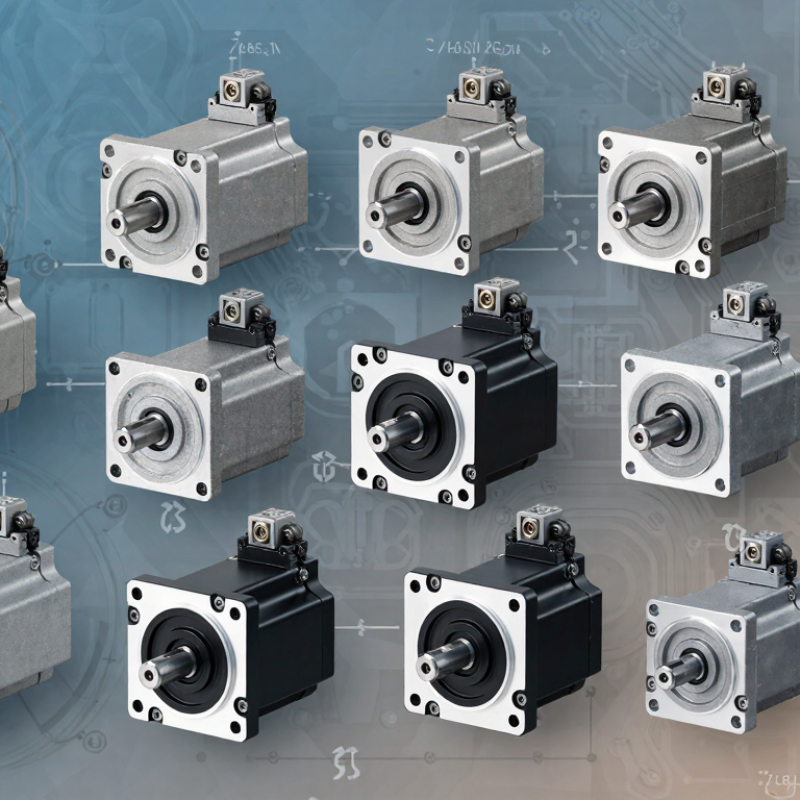
China Top 10 Precision Motor Manufacturers for Buyers

What Precision Motors Are and Why Their Manufacturers Matter

Precision motors convert electrical energy into controlled motion, with close regulation of speed, position, or torque. They are used in robotics, medical equipment, factory automation, and instruments where movement must be repeatable. The term covers several motor designs; “precision” describes performance, not one specific motor type. A small positioning error can shift a robotic gripper or spoil alignment on an assembly line.

Tiny differences matter.

Manufacturers matter because design choices affect heat, vibration, noise, and service life. Buyers should check performance across the intended speed and load range, not just a headline accuracy figure. Ask how torque ripple, thermal rise, and encoder feedback are tested.

The IEA’s 2011 report, Energy-Efficiency Policy Opportunities for Electric Motor-Driven Systems, estimates motor-driven systems use about 46% of global electricity and 69% of industrial electricity. Those figures concern motor systems broadly, not precision motors alone. Still, they show why efficiency and reliable operation deserve scrutiny.

A polished datasheet helps, but it cannot replace test conditions and repeatable quality records. That is easy to overlook. Sourcing decisions also involve trade-offs: tighter tolerances may improve control, yet raise cost or complicate maintenance. A careful comparison should include both.

How to Evaluate China’s Precision Motor Manufacturers

When evaluating China’s precision motor manufacturers, begin with the operating conditions, not a catalog headline. Record the required speed range, torque, duty cycle, mounting space, and ambient temperature. Then ask how the supplier measures these values. A torque curve is more useful when its test conditions are clearly stated. Numbers need context.

Review the manufacturing controls behind each specification. Ask about shaft runout, bearing selection, winding consistency, and inspection frequency. Request sample test records, plus details on how production batches are traced. A polished sample alone proves little. It may not reflect routine output, so check how the manufacturer manages process changes and rejects. Small details matter.

Communication also deserves a practical test. Send a clear drawing and ask which dimensions need confirmation before production. Specific questions about tolerances, connectors, or thermal limits can reveal whether technical staff understand the application. Compare sample results with your own test setup, since measurement methods can differ. This part is easy to rush. It should not be. A capable supplier should explain limitations plainly, offer realistic lead times, and document agreed changes. If answers stay vague, pause and clarify before committing.

China’s Top 10 Precision Motor Manufacturers by Core Strengths

China’s precision motor market includes manufacturers with very different strengths. A useful Top 10 comparison should look beyond rank and examine what each supplier can actually build. Some focus on servo control and stable feedback; others specialize in stepper positioning, efficient brushless motors, or compact coreless designs. Fit matters.

Other core strengths include geared motors for higher torque, high-speed spindle motors, and direct-drive units designed for smooth motion. Custom winding and shaft dimensions can matter when a motor must fit a tight housing. Production capacity is another distinction: a supplier suited to prototypes may not handle repeat orders with consistent tolerances. Ask for dimensional drawings, test conditions, and sample measurements.

For buyers, compare these strengths against the real operating load, duty cycle, noise limit, and available installation space. A small motor running near its thermal limit may fail the application, even when its headline specifications look attractive. Requesting a sample and checking temperature, vibration, and speed under load gives more useful evidence than a catalog alone. Supplier capabilities can change, too; published information is not always complete. That deserves a closer look.

China Top 10 Precision Motor Manufacturers for Buyers — China’s Top 10 Precision Motor Manufacturers by Core Strengths

Anonymous capability archetypes for buyer research, not a verified ranking of named companies. The applications and evaluation criteria below describe established motor technologies; confirm each supplier’s actual specifications, certifications, and production capabilities directly.

No. Anonymous manufacturer profile Core strength Typical applications Key buyer evaluation points Useful validation evidence
1 Servo motor specialist Precise speed and position control when paired with a compatible drive and feedback system. Robotics, CNC machinery, packaging equipment, and automated production lines. Rated torque and speed, overload capability, encoder resolution, inertia matching, and drive compatibility. Motor-and-drive test results, encoder specifications, thermal data, and documented positioning performance.
2 Brushless DC motor specialist Electronically commutated operation without brushes; available in designs suited to a range of speeds and sizes. Cooling fans, pumps, appliances, medical devices, and compact automation equipment. Continuous and peak power, speed range, controller requirements, acoustic performance, and cooling method. Efficiency curves, operating-temperature limits, endurance results, and controller test documentation.
3 Stepper motor specialist Incremental motion control; open-loop operation can be suitable when the application’s load and accuracy requirements permit it. Printers, laboratory instruments, positioning stages, and light-duty automation. Holding torque, torque at operating speed, step angle, resonance behavior, and driver compatibility. Torque-speed curves, step-angle data, temperature-rise tests, and sample testing under the intended load.
4 Precision gearmotor specialist Combines a motor with a gearbox to trade speed for torque; gearbox design affects backlash and efficiency. Conveyors, automated guided equipment, compact actuators, and industrial mechanisms. Output torque and speed, gear ratio, backlash, efficiency, allowable radial and axial loads, and service life. Gearbox drawings, backlash measurements, rated-load endurance results, and lubrication specifications.
5 Direct-drive torque motor specialist Delivers torque directly to the load without a conventional reduction gearbox in many applications. Rotary tables, indexing systems, semiconductor equipment, and high-precision machine tools. Continuous and peak torque, torque ripple, cooling requirements, bearing arrangement, and encoder integration. Torque-ripple measurements, thermal test data, runout specifications, and system-level accuracy tests.
6 Linear motor specialist Produces linear force directly, avoiding the rotary-to-linear conversion used in screw-driven systems. Precision stages, inspection equipment, pick-and-place systems, and machine tools. Continuous and peak force, travel range, speed, thermal management, guidance requirements, and feedback resolution. Force-speed curves, straightness and repeatability measurements, thermal data, and integration drawings.
7 High-speed spindle motor specialist Designed for high rotational speeds, with performance dependent on bearings, cooling, balancing, and the drive system. CNC spindles, grinding equipment, dental devices, and high-speed machining. Maximum and continuous speed, power curve, runout, bearing configuration, cooling method, and tool interface. Balance and runout reports, bearing-life information, vibration test results, and operating-speed endurance tests.
8 Miniature precision motor specialist Compact motor designs for applications with tight limits on size, mass, power consumption, or noise. Optical equipment, small pumps, medical instruments, handheld devices, and compact robotics. Envelope dimensions, torque or power density, no-load current, noise, thermal limits, and lead or connector options. Dimensional inspection records, electrical test data, noise measurements, and samples tested in the target device.
9 Integrated motor-and-drive specialist Combines a motor with drive electronics to reduce separate components and simplify system integration. Distributed automation, compact machinery, robotics, and modular production equipment. Communication interfaces, control modes, enclosure rating, heat dissipation, firmware support, and safety requirements. Interface documentation, EMC test reports, software-version controls, and complete-unit thermal testing.
10 Custom winding and application-engineering specialist Adapts motor windings, mechanical interfaces, and electrical characteristics to defined application requirements. OEM equipment, specialized actuators, replacement assemblies, and application-specific machinery. Engineering-change control, prototype lead time, minimum order quantity, repeatability, and lifecycle support. Approved drawings, sample qualification results, process controls, traceability records, and change-notification procedures.

Comparing Product Quality, Customization, and Production Capacity

A useful comparison of ten precision motor manufacturers starts with evidence, not catalog language. The International Energy Agency’s 2011 report, Energy-Efficiency Policy Opportunities for Electric Motor-Driven Systems, estimated that these systems consume about 45% of global electricity. The figure is an estimate, not a current measurement, but it shows why efficiency and durability deserve close attention. Ask for test data at the intended voltage, load, and duty cycle. Check winding resistance, temperature rise, vibration, and noise on the same sample. Small deviations matter.

Customization is more than changing a shaft length. Buyers should confirm whether a supplier can adjust winding design, encoder feedback, connectors, mounting dimensions, and control parameters without disrupting repeatability. Request a drawing review and a pilot lot before approving production. Then compare measured results across units. A polished prototype proves little. Production capacity matters too: ask about monthly output, lead times, critical component sourcing, and how rejected units are recorded. IEC 60034 provides established performance and testing frameworks for rotating electrical machines; ask which relevant tests are performed and how results are documented. I would still inspect the process myself. Paperwork can miss a loose connector or an inconsistent bearing fit.

How Buyers Can Select and Purchase the Right Manufacturer

Choosing among China’s precision motor manufacturers starts with the application, not a catalog headline. Define required torque, speed range, duty cycle, dimensions, and operating temperature before requesting quotations. The International Energy Agency’s 2011 report, Energy-Efficiency Policy Opportunities for Electric Motor-Driven Systems, estimated that motor-driven systems used about 53% of global electricity. That figure is dated, but it underscores why efficiency should be measured under real operating conditions. Ask for test results at your intended speed, load, and voltage. Fit matters.

Compare shortlisted manufacturers using torque-speed curves, dimensional drawings, shaft runout limits, thermal-rise data, and noise or vibration readings. Match these against the actual assembly, including bearing loads, ambient heat, starts per hour, and available space. Check sample-to-batch consistency through inspection records and agreed acceptance limits, not verbal assurances. For a pilot order, test several units with the same setup. A polished sample can conceal variation. Ask how production changes and components are tracked, where applicable. No spreadsheet catches every vibration, so allow time for a witnessed test and a design revision. If a supplier promises tight tolerances, ask which instruments and methods verify them.

FAQS

What should buyers compare when choosing a precision motor supplier?

Compare motor type, control performance, customization, production capacity, and test evidence. A good catalog is not enough.

Which motor type suits different applications?

Servo motors support controlled motion and feedback. Stepper motors suit positioning, while geared motors provide higher torque. The actual load matters.

How can buyers check whether a motor fits their application?

Test it under the intended load, voltage, and duty cycle. Measure temperature, vibration, speed, and noise. Small differences count.

Why request a sample before placing a larger order?

A sample can reveal heat buildup or vibration that specifications miss. Samples tell more.

What details can suppliers customize?

Buyers can ask about winding design, shaft dimensions, encoder feedback, connectors, mounting, and control settings. Confirm changes with drawings.

How can buyers assess production capacity?

Ask about monthly output, lead times, component sourcing, and rejected-unit records. A prototype does not prove consistent production.

Which motor tests are useful to review?

Request results for winding resistance, temperature rise, vibration, and noise. Check that conditions match the planned application.

Do published specifications always provide enough evidence?

No. Published information may be incomplete or outdated. I would inspect the process, too; paperwork can miss a loose connector.

Conclusion

This guide explains what a Precision Motor is, where it is used, and why choosing the right manufacturer matters for performance, reliability, and long-term value. It outlines practical ways to assess manufacturers in China, including their engineering capabilities, quality-control processes, technical support, and experience producing motors for different applications. Rather than treating all suppliers as alike, the guide compares ten manufacturers by their core strengths and considers how those strengths may suit different buyer requirements.

Buyers can also use the guide to compare product quality, customization options, production capacity, delivery expectations, and communication during the development process. It offers a straightforward approach to selecting and purchasing a suitable motor: define the application and technical requirements, request relevant specifications and samples, clarify customization and quality expectations, and evaluate whether production capabilities align with projected demand. These steps help buyers make a more informed choice and build a productive supplier relationship.

Ethan

Ethan

Ethan is a seasoned marketing professional with a deep expertise in our company's innovative product line. With a passion for sharing knowledge and insights, he takes the lead in regularly updating our corporate blog, where he explores industry trends, product features, and effective marketing......