Stepper motors play a vital role in various industries, offering precision and reliability. As expert Jane Smith, a renowned engineer in automation, notes, “Stepper motors are the heartbeat of modern machinery.” This highlights their importance across different applications.
From CNC machines to 3D printers, stepper motors enable accurate control over movement. They allow engineers to design systems that require precise positioning. However, despite their many benefits, there can be challenges in integration. The learning curve can frustrate beginners, necessitating thorough understanding and careful planning.
Many buyers may overlook potential pitfalls, such as choosing the wrong motor type. This may lead to inefficiencies in production. A deeper familiarity with stepper motor specifications can mitigate these issues. Understanding torque ratings and step angles is crucial for optimal performance. Investing time in research and education will pay off, ultimately enhancing efficiency and reducing production costs.
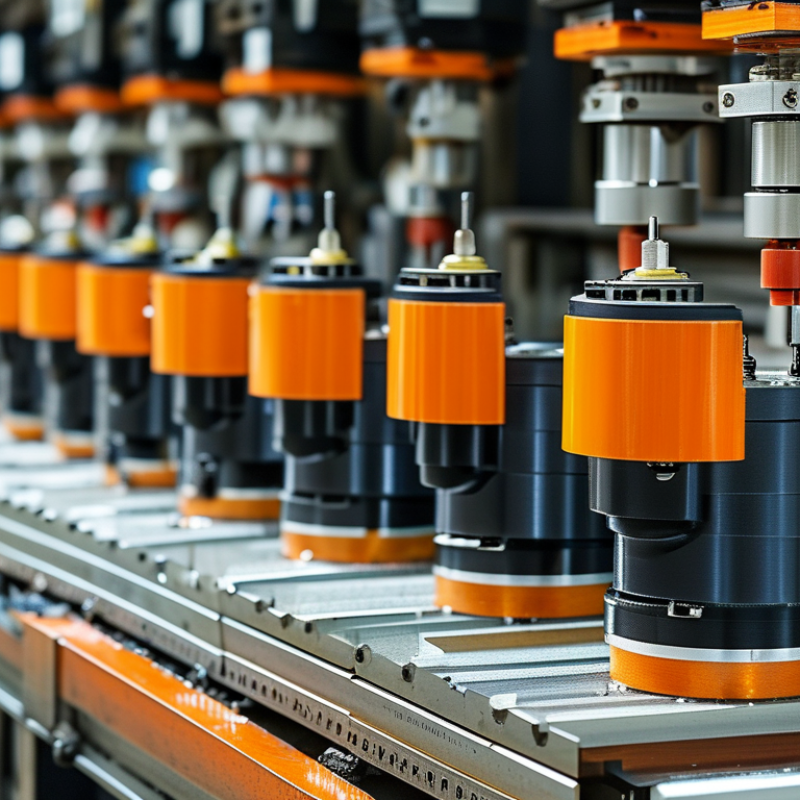
Stepper motors are widely used in various applications due to their precise control and reliability. These motors operate in fixed steps, which allows them to move accurately without the need for feedback systems. They are commonly utilized in 3D printers, CNC machines, and robotics. The key benefits include high torque at low speeds and excellent repeatability. This makes them ideal for tasks requiring exact positioning.
When selecting a stepper motor, consider the application’s requirements. For instance, assess the torque needs and the desired speed. Look into the environmental conditions as well. A stepper motor exposed to dust or moisture might need specific protective measures. Understand that inadequate planning could lead to efficiency issues. Always test the setup with real-time applications for optimal performance.
Tips: Pay attention to the voltage ratings. Overvoltage can cause overheating. Also, remember that not all stepper motors are the same. Research and compare specifications before making a decision. Balancing cost with quality often leads to better long-term results. Maintaining an awareness of potential pitfalls will help in achieving desired outcomes.
Stepper motors play a vital role across various industries. Their precise control and reliability make them attractive options for many applications. One common industry utilizing stepper motors is the manufacturing sector. Here, they drive robotic arms in assembly lines, ensuring accuracy and efficiency. The ability to control position without the need for feedback significantly boosts productivity.
Another industry where stepper motors are essential is healthcare. They are used in medical devices, such as MRI machines and infusion pumps. The precision of these motors is crucial for achieving accurate results and maintaining patient safety. In addition, the automation of laboratory equipment often relies on stepper motors for consistent performance.
The automotive industry also benefits from stepper motors in applications like electric seat adjustments and dashboard instrumentation. They deliver reliability in environments with vibrations and varying temperatures. While stepper motors are highly effective, their heat generation in continuous operation can be a concern. Understanding these nuances is essential for improving designs and applications across sectors.
| Application | Industry | Key Features | Benefits |
|---|---|---|---|
| 3D Printers | Manufacturing | Precise control, low speed | High accuracy, versatility |
| CNC Machines | Metalworking | High torque, smooth operation | Enhanced productivity, precision |
| Robotics | Automation | Programmable, repeatable positioning | Increased efficiency in operations |
| Textile Manufacturing | Textiles | Constant torque, reliable | Quality consistency, durability |
| Medical Equipment | Healthcare | Precision movements, reliability | Safety and accuracy |
| Camera Systems | Photography | Fine controls, quick response | Enhanced imaging quality |
| Electronics Assembly | Electronics | High accuracy positioning | Improved assembly efficiency |
| Food Processing | Food & Beverage | Consistency, reliability | Improved product quality |
| Aerospace Applications | Aerospace | High reliability, precision | Safety and operational efficiency |
| Automated Guided Vehicles (AGVs) | Logistics | Accurate positioning | Enhanced transport efficiency |
Stepper motors play a crucial role in automation across various industries. They provide precise control of position and speed, making them ideal for applications where accuracy is essential. For instance, in 3D printers, stepper motors drive the print head and build platform, ensuring that each layer is accurately placed. Their ability to step in defined increments allows for complex designs and high-resolution prints.
In robotics, stepper motors are commonly used for joint actuation. This enables robots to replicate human-like movement with consistency. Automation in manufacturing often employs stepper motors for conveyor systems and assembly lines. These motors can control the movement of items with great precision, reducing errors during production. However, not all applications benefit from the inherent characteristics of stepper motors. In high-speed environments, other motor types might offer better performance.
Another area of application is in CNC machines, where stepper motors provide the needed control for cutting and engraving. Despite their advantages, there are limitations with torque at high speeds. Engineers must carefully evaluate requirements before selecting stepper motors. Understanding these nuances fosters better decision-making on motor selection for each specific automation task.
Stepper motors play a crucial role in robotics and precision machinery. They offer precise control over movement. This accuracy is essential for applications like 3D printers and CNC machines. In robotics, stepper motors enable fine-tuned actuations. They allow robots to move with precision, which enhances performance in tasks like assembly and material handling.
Despite their many advantages, there are challenges associated with stepper motors. They can lose steps if overloaded or if the control system fails. This can lead to inaccuracies in applications where precision is paramount. Additionally, their torque can decrease at higher speeds. Users must weigh these limitations against the benefits when integrating stepper motors into their systems.
In manufacturing, stepper motors are often used for automation. They are vital for conveyor belts and robotic arms. Accurate positioning is needed to optimize productivity. However, selecting the right stepper motor requires careful consideration. Each application may demand specific features and tuning. Understanding these nuances can prevent potential pitfalls in design and execution.
The future of stepper motor technology is promising, shaped by advancements in automation and robotics. According to a recent market report, the global stepper motor market will grow at a CAGR of over 6% from 2023 to 2028. This growth is driven by the rising demand in industrial automation and precision applications. As industries adopt more automated systems, the need for reliable and efficient motor drive solutions has increased.
Emerging trends indicate that stepper motors will integrate with smart technologies. They will soon enable real-time data feedback and control. These innovations allow for improved performance, energy efficiency, and adaptability in various applications, from 3D printing to CNC machines. A study highlighted that smart stepper motors could enhance productivity by at least 30% through optimized motion control.
Tip: Keep an eye on the evolving smart motor systems. They will redefine maintenance and operational efficiency in complex systems.
Another trend is the miniaturization of stepper motors. Smaller motors are now capable of delivering higher torque and precision, expanding their use in consumer electronics. However, the challenge remains in balancing size with performance. Manufacturers must consider thermal management and power consumption in their designs.
Tip: Explore the synergy of smaller motors with advanced control algorithms. This combination can yield remarkable improvements in functionality.
: Stepper motors are commonly used in 3D printers, CNC machines, and robotics. They offer precise control and reliability.
Key benefits include high torque at low speeds and excellent repeatability. They excel in tasks requiring exact positioning.
Consider the application’s torque and speed needs. Assess environmental conditions to prevent issues like moisture damage.
Not always. In high-speed situations, other motor types may outperform stepper motors. Evaluate specific requirements carefully.
Emerging trends include integration with smart technologies. This allows real-time data feedback and improved energy efficiency.
Smaller stepper motors now deliver high torque and precision. However, balancing size with performance and thermal management is challenging.
Inadequate planning can lead to efficiency problems. Always test the setup in real-time applications to ensure optimal performance.
Smart stepper motors enhance productivity by optimizing motion control. They could improve efficiency by at least 30%.
Pay attention to voltage ratings. Overvoltage can cause overheating, leading to potential failures in the motor's operation.
Not all stepper motors are the same. Comparing specifications helps in making informed decisions based on quality and cost.
Stepper motors are widely recognized for their precision and reliability, making them essential components across various industries. This article delves into the benefits of stepper motors, highlighting their applications in automation, robotics, and precision machinery. Common industries utilizing stepper motors include manufacturing, healthcare, and aerospace, where they play a crucial role in enhancing operational efficiency and accuracy.
As technology evolves, the future trends in stepper motor applications indicate a shift toward greater integration with smart systems and advancements in control algorithms. These developments promise to further expand the versatility of stepper motors, enabling them to meet the growing demands for automation and precision in modern engineering solutions.
