Top AC Motor Manufacturers for Global Buyers

Time:2026-10-17 Author:Liam
0%

Choosing among the top AC Motor manufacturers requires more than comparing prices or browsing polished product pages. Global buyers need evidence, technical judgment, and practical experience. An AC Motor may look identical in a catalogue, yet its performance can change with voltage, frequency, load profile, cooling method, and installation conditions.

Dr. Austin Hughes, author of Electric Motors and Drives, described the electric motor as “the workhorse of industry.” That simple observation still matters. A motor may run continuously inside a dusty factory, beside a hot compressor, or under repeated starts in a conveyor system. Small design differences then become visible through noise, heat, vibration, and energy consumption.

This guide examines manufacturers through measurable criteria. These include efficiency ratings, IEC compliance, insulation systems, enclosure protection, bearing quality, factory testing, customization, and after-sales support. Production capacity matters too, especially when buyers need consistent batches across several countries. Documentation must be clear. Test reports should be traceable.

There is no universally perfect supplier. That is uncomfortable, but realistic. A premium AC Motor can still fail when selected for the wrong duty cycle or poorly installed. Likewise, a lesser-known manufacturer may offer strong engineering and responsive service, but require closer verification. Buyers should compare technical data with field references, warranty terms, delivery records, and local service capability.

The strongest manufacturers combine dependable construction with honest specifications. This review helps procurement teams identify those differences before a motor reaches the production floor. Performance begins before purchase.
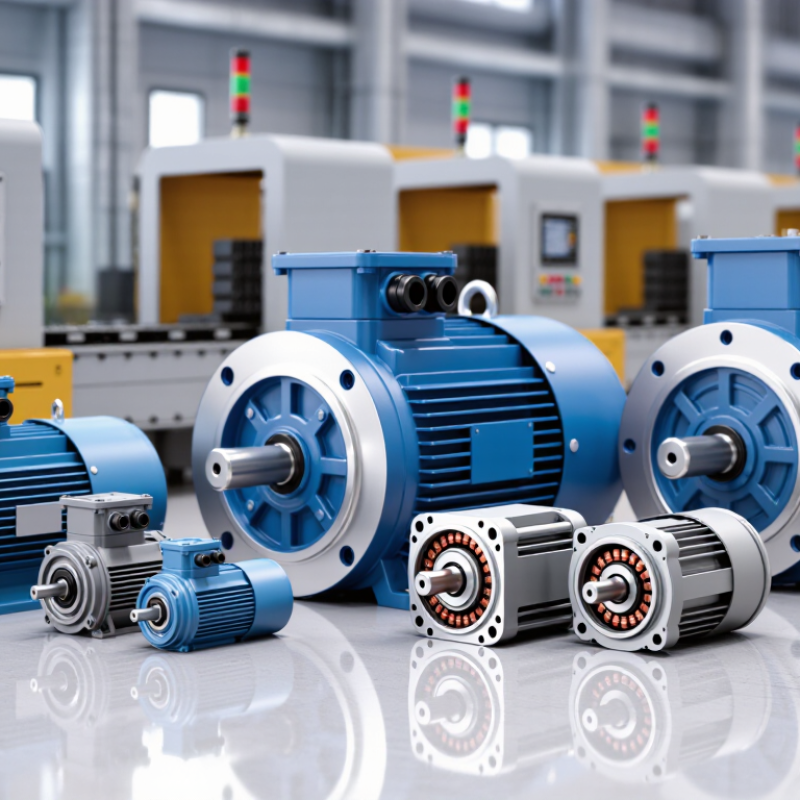
Top AC Motor Manufacturers for Global Buyers

AC Motor Market Scope: Motors Consume About 46% of Global Electricity (IEA)

Top AC Motor Manufacturers for Global Buyers

The AC motor market deserves closer attention because motors consume about 46% of global electricity, according to the IEA. That figure turns a purchasing decision into an energy strategy. Motors drive pumps, fans, compressors, conveyors, and countless production systems. A small efficiency gain can reduce electricity use across thousands of operating hours. Yet the purchase price rarely shows the full cost.

Global buyers should examine efficiency data under real operating conditions. Check rated load, speed, voltage, frequency, duty cycle, and ambient temperature. A motor designed for a factory in a cool climate may perform differently in a humid coastal plant. Enclosure protection also matters. Dust, water, and poor ventilation can shorten service life. Request test reports, certification records, warranty terms, and maintenance guidance from each manufacturer.

Look beyond the nameplate.

Reliable manufacturers should explain performance clearly and support international standards, such as IEC 60034. Their factories should demonstrate traceable testing, consistent materials, and documented quality controls. Local service capacity can be equally important. Spare bearings, repair skills, and response times affect downtime more than polished sales language. Energy-efficient models may cost more initially, but lifecycle calculations usually reveal their value. Still, assumptions can mislead. Production loads change, electricity prices fluctuate, and estimated savings may prove optimistic. Buyers should verify measurements after installation, not trust a forecast alone.

AC Motor Types: Induction and Synchronous Designs from 0.12 to 1,000 kW

Top AC Motor Manufacturers for Global Buyers

AC motors from 0.12 to 1,000 kW serve very different operating demands. Small motors often drive fans, pumps, conveyors, and compact machinery. Larger units support compressors, crushers, mixers, and industrial production lines. The correct choice depends on load profile, starting torque, speed control, duty cycle, and installation conditions. Fit matters.

Induction motors remain widely used because their construction is robust, cost-effective, and relatively simple to maintain. Squirrel-cage designs suit constant-speed applications and harsh industrial environments. With a variable frequency drive, they can provide useful speed control, but efficiency may fall at partial loads. Buyers should check rated current, service factor, insulation class, enclosure rating, and cooling method. A lower purchase price is not always the lower lifecycle cost.

Synchronous motors can maintain precise speed under changing loads. They may also improve power factor, especially in larger installations. Permanent-magnet and electrically excited designs require closer attention to control systems, thermal limits, and service expertise. Experienced purchasers compare performance data under real operating conditions, not only catalog values. Testing should reference applicable IEC 60034 requirements and include vibration, temperature rise, noise, and efficiency results. A neat specification sheet can still miss field problems. Review ambient temperature, altitude, dust, moisture, and maintenance access before approval. Real installations are rarely perfect.

Leading Manufacturers: ABB, Siemens, WEG, Nidec, and TECO Compared

Global buyers often compare five established AC motor manufacturers by more than catalog size. One European supplier stands out for industrial drives, strong IEC compliance, and detailed digital documentation. Another offers broad automation integration, making motor and inverter commissioning easier. A large Brazilian producer is valued for rugged cast-iron frames, competitive pricing, and practical support across emerging markets.

A Japanese manufacturer typically appeals to buyers needing compact motors, quiet operation, and stable quality in factory equipment. A Taiwanese supplier often competes through flexible specifications, accessible pricing, and broad low-voltage ranges. These differences matter during selection.

A pump installation may prioritize IE4 efficiency and variable-frequency-drive compatibility. A conveyor line may need high starting torque, IP55 or IP66 protection, and easily replaced bearings. Details matter.

My procurement checks include voltage, frequency, mounting type, duty cycle, ambient temperature, and service availability. I also request verified efficiency data rather than relying on marketing language. Lead time can outweigh a small purchase-price advantage, especially when a production line waits for one replacement motor. Warranty terms deserve close reading because coverage may depend on installation records and approved components. I have found that published performance figures do not always reflect dusty sites, voltage fluctuation, or poor alignment. The comparison is useful, but it remains imperfect without application data, maintenance history, and a realistic total-cost calculation.

Efficiency Benchmarks: IE3, IE4, and IE5 Classes under IEC 60034-30-1

Top AC Motor Manufacturers for Global Buyers

Efficiency classes matter when comparing AC motor manufacturers. IEC 60034-30-1 defines efficiency levels for covered line-operated motors under specified test conditions. IE3 motors deliver high efficiency. IE4 reduces losses further. IE5 targets the highest efficiency tier available within the applicable standard scope.

Check the test basis carefully. A nameplate rating alone does not prove real operating efficiency. Request the declared efficiency, rated speed, power factor, slip, and test method. For example, a 75 kW motor running near full load may show different results from one operating at 40% load. Installation also matters. Poor alignment, oversized drives, and clogged cooling paths can erase expected savings.

Procurement teams should compare lifetime energy costs, not only purchase prices. Measure annual running hours, electricity tariffs, load profiles, and service conditions. IE4 may offer a practical balance for continuous-duty equipment. IE5 can be attractive where operating hours are high and energy prices justify the premium. However, compatibility with variable-speed drives needs verification. The motor, inverter, bearings, insulation system, and cooling design must work together.

Small details deserve attention. Ask for independent test records and tolerances. Confirm efficiency at 50 Hz or 60 Hz, as required. Regional documentation can vary. That creates avoidable confusion. IE5 terminology also requires careful checking against the current IEC edition and product scope. A polished efficiency claim may still hide assumptions. Good buyers challenge them.

Top AC Motor Manufacturers for Global Buyers — Efficiency Benchmarks

Reference efficiency thresholds for 4-pole, 50 Hz, line-operated AC motors under IEC 60034-30-1. Values are rounded percentages and contain no company or brand data.

IE4 requires higher minimum efficiency than IE3 across the shown motor ratings. IE5 is marked N/A because the widely referenced IEC 60034-30-1:2014 tables do not assign a numeric IE5 minimum; applicable national regulations and the latest IEC edition should be checked before procurement.

Global Compliance: IEC 60034, NEMA MG 1, CE, UL, and 50/60 Hz Standards

When selecting AC motor manufacturers for global buyers, compliance should guide the technical review.
IEC 60034 addresses motor performance, testing, dimensions, temperature rise, insulation, and efficiency. NEMA MG 1 uses different design references and performance expectations. These standards are not interchangeable.

A dependable supplier should provide complete test reports, drawings, nameplate data, and traceable production records. Check rated voltage, frequency, output, efficiency, insulation class, enclosure, and mounting details. Confirm whether the motor supports 50 Hz, 60 Hz, or both. Small differences matter. A 50 Hz motor may run differently on a 60 Hz supply, affecting speed, current, and heating.

CE marking supports applicable European conformity requirements, while UL certification or recognition may be requested for North American installations. Buyers should verify the exact motor model, not only the manufacturer’s general certificate. Factory acceptance testing can include winding resistance, no-load current, vibration, noise, and temperature-rise checks. It is easy to trust a certificate too quickly. Documents can be current, but the supplied configuration may have changed. Ask for serial-number traceability and recent inspection evidence. No checklist is perfect. Experienced buyers still revisit assumptions, especially when voltage, frequency, duty cycle, or environmental conditions differ between the factory and the installation site.

FAQS

Why is AC motor efficiency important for global buyers?

Motors consume about 46% of global electricity. Even small efficiency gains matter after thousands of operating hours. The purchase price is only part of the cost.

What operating details should buyers check before selecting a motor?

Check load, speed, voltage, frequency, duty cycle, and ambient temperature. Also review altitude, dust, moisture, ventilation, and mounting space. Real conditions matter more than a perfect catalog.

Which AC motor type suits common industrial applications?

Induction motors suit pumps, fans, conveyors, and many constant-speed machines. Their construction is robust and relatively simple to maintain. They are not ideal for every changing-load application.

When should buyers consider synchronous motors?

Synchronous motors can maintain precise speed under changing loads. Larger installations may benefit from improved power factor. However, control systems and service skills require closer attention.

How do voltage and frequency affect motor performance?

Confirm whether the motor supports 50 Hz, 60 Hz, or both. Frequency changes can affect speed, current, and heating. Small differences can create large problems.

Which documents should a reliable supplier provide?

Request drawings, nameplate data, test reports, warranty terms, and maintenance guidance. Production records should support traceability. Certificates alone may not prove the delivered configuration.

What testing should buyers request before approval?

Consider winding resistance, no-load current, vibration, noise, efficiency, and temperature-rise tests. Factory acceptance testing can reveal issues early. Field measurements remain necessary.

How can buyers compare the real lifecycle cost?

Compare purchase price, energy use, maintenance, spare bearings, repair skills, and downtime. Estimated savings may be optimistic. Measure performance after installation instead of trusting forecasts alone.

Conclusion

The AC Motor market is a critical part of global energy consumption, with electric motors accounting for a significant share of worldwide electricity use. This guide explains the main motor designs, including induction and synchronous models, covering power ranges from approximately 0.12 to 1,000 kW. It also highlights how buyers can compare motor performance, application suitability, durability, maintenance needs, and total operating costs across different industrial and commercial requirements.

Energy efficiency is another central consideration. IE3, IE4, and IE5 classifications under IEC 60034-30-1 provide useful benchmarks for reducing electricity consumption and long-term operating expenses. Global buyers should also confirm compliance with relevant IEC 60034 and NEMA MG 1 requirements, as well as CE and UL certifications where applicable. Compatibility with regional voltage systems and 50 or 60 Hz frequencies is equally important for safe, reliable, and efficient installation.

Liam

Liam

Liam is a dedicated marketing professional with a profound expertise in the industry, where he excels at highlighting the unique advantages of our core products. With a keen understanding of market trends and consumer needs, Liam frequently updates our company’s professional blog, providing......