Industrial Motor manufacturers quietly power factories, water systems, mines, elevators, and transport networks worldwide. Their equipment turns electrical energy into controlled mechanical force, often running continuously under demanding conditions. The best manufacturers compete through efficiency, reliability, digital monitoring, and responsive service, not merely through production volume.
Dr. Paul Waide, an internationally recognized energy-efficiency expert, has stated, “Electric motors are the single largest end use of electricity.” That observation gives this ranking practical importance. A small efficiency improvement can reduce heat, operating costs, and carbon emissions across thousands of machines. However, efficiency labels alone do not tell the complete story. A motor operating in a dusty steel mill faces different risks from one installed in a clean packaging line.
This overview examines the Top 10 Industrial Motor Manufacturers Worldwide through several practical lenses. These include product breadth, IE-class efficiency, engineering capability, automation integration, global support, and performance in demanding industries. Major names may include companies known for induction motors, synchronous motors, servo systems, and explosion-protected designs. Their strengths are not identical.
A useful ranking is never perfectly universal. Regional availability, purchase price, maintenance skills, and supply conditions can change the result. That limitation deserves attention. A technically excellent motor may still disappoint if spare parts arrive slowly or commissioning support is weak.
The discussion therefore combines market reputation with real operating considerations. It looks beyond attractive specifications and asks harder questions. Can the motor maintain stable output? Does its control system communicate clearly? Can technicians service it safely? These details often decide whether an Industrial Motor becomes a long-term asset or an expensive replacement.
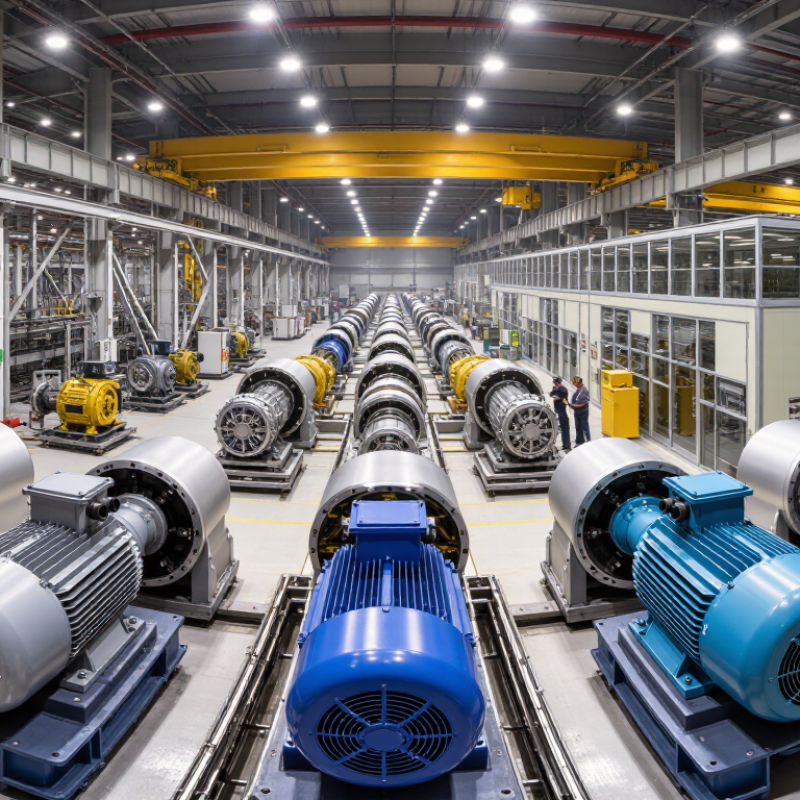
Industrial Motor Market Scope: AC, DC, Servo, and Traction Motor Segments
Top 10 Industrial Motor Manufacturers Worldwide?
The industrial motor market cannot be judged by one ranking alone. Product strength changes across AC, DC, servo, and traction motor segments. MarketsandMarkets reports that industrial motors are gaining demand through factory automation, energy efficiency, and electrification. Its recent research places the market on a steady growth path through 2028, although estimates vary by region and application.
AC motors remain the volume leader. They drive pumps, compressors, conveyors, fans, and machine tools. Their simple construction suits harsh plant floors and long operating hours. DC motors still serve legacy equipment and applications requiring straightforward speed control. However, maintenance costs can rise because brushes and commutators wear. That detail is often underplayed.
Servo motors occupy a smaller but higher-value segment. They support robotic arms, packaging lines, and precision positioning. Report data from Fortune Business Insights indicates continued expansion in the servo motor market, supported by smart manufacturing investments. Traction motors are also advancing, particularly in rail systems, electric buses, and industrial vehicles. The International Energy Agency links transport electrification with rising demand for efficient motor systems.
A credible top-ten comparison should examine efficiency classes, thermal design, control compatibility, service networks, and lifecycle reliability. Purchase price alone misleads. Forecasts are not promises. Regional supply risks, raw-material costs, and changing efficiency standards can quickly alter market positions. My practical concern is simple: manufacturers may advertise peak efficiency, while factories experience partial-load losses. That gap deserves closer measurement.
Ranking Method: Revenue, Production Capacity, IEC 60034-30-1 Efficiency, and R&D
Top 10 Industrial Motor Manufacturers Worldwide?
A credible ranking needs more than annual sales. This assessment weights revenue at 35%, production capacity at 25%, efficiency at 25%, and R&D at 15%. Revenue reflects market reach, while capacity shows whether suppliers can deliver thousands of units consistently. Company filings, audited reports, and industrial shipment data provide the commercial evidence.
Efficiency requires stricter testing. IEC 60034-30-1 defines motor classes from IE1 to IE4, with IE4 representing the highest standard efficiency tier in common industrial use. The International Energy Agency reports that electric motor systems consume nearly half of global electricity. Small efficiency gains matter. A 1% improvement can reduce heat, operating costs, and pressure on factory cooling systems. The ranking therefore gives greater credit to manufacturers with broad IE3 and IE4 portfolios, not only premium laboratory models.
R&D is measured through patent activity, engineering investment, digital monitoring, and variable-speed compatibility. Industry reports from the U.S. Department of Energy also identify motor-driven equipment as a major industrial energy-saving opportunity. Production claims remain difficult to compare. Some companies report installed capacity, while others disclose actual output. That weakness should be acknowledged. A high-revenue manufacturer may still lose points if its efficiency data lacks independent verification or its factories show limited regional coverage. The final top-ten list should be refreshed annually, because energy standards, raw-material prices, and automation demand change quickly.
Top 10 Industrial Motor Manufacturers Worldwide — Ranking Framework Reference
IEC 60034-30-1 efficiency benchmark for a four-pole, 75 kW motor. Revenue, production capacity, efficiency compliance, and R&D capability are the core dimensions used in a manufacturer ranking; company names and company-specific data are intentionally excluded.
Source: IEC 60034-30-1:2014 efficiency-class reference values. Higher efficiency classes indicate lower electrical losses at rated load.
Top 10 Manufacturers Compared by Global Sales, Product Range, and Market Reach
Top 10 Industrial Motor Manufacturers Worldwide
The world’s top ten industrial motor manufacturers compete through sales, product range, and market reach. Global sales show production strength, but they do not tell the whole story. A manufacturer selling across Asia, Europe, and North America may offer stronger supply security than a larger regional supplier. Recent revenue reports, shipment volumes, and factory capacity provide useful comparison points. Still, public figures can differ between fiscal years, which makes rankings imperfect.
Product range is equally important. Leading manufacturers typically supply low-voltage, medium-voltage, servo, brake, explosion-resistant, and high-efficiency motors. Some also provide drives, controls, monitoring software, and repair services. This wider portfolio helps factories standardize equipment across conveyors, pumps, compressors, and robotic lines. Market reach adds another practical test. Local warehouses, trained technicians, spare-parts access, and certification support can reduce downtime when a motor fails at 2 a.m.
Tips: Compare efficiency ratings, torque requirements, duty cycles, warranty terms, and service coverage. Ask for test certificates and lifecycle cost estimates. A cheaper purchase price may hide higher energy use or slower maintenance response. I have found that application fit often matters more than headline sales. Buyers should also check voltage compatibility, enclosure protection, noise levels, and installation space. No ranking is permanent. Regional demand, energy regulations, and supply-chain changes can quickly reshape the top ten.
Top 10 Industrial Motor Manufacturers Worldwide? - Top 10 Manufacturers Compared by Global Sales, Product Range, and Market Reach
| Rank |
Anonymous Supplier |
Estimated 2024 Industrial Motor Sales
(USD Billion) |
Motor Product Categories |
Approx. Countries Served |
Manufacturing Locations |
Service & Repair Network |
IEC / NEMA Coverage |
Main Industrial Applications |
Market Reach Score
(100) |
| 1 |
Supplier A |
4.0–5.0 |
9+ |
170+ |
40+ |
Extensive |
Full |
Energy, infrastructure, process industries, transport |
98 |
| 2 |
Supplier B |
3.0–4.0 |
8+ |
160+ |
30+ |
Extensive |
Full |
Industrial automation, utilities, machinery, HVAC |
95 |
| 3 |
Supplier C |
2.0–3.0 |
8+ |
150+ |
25+ |
Extensive |
Full |
Mining, marine, oil and gas, heavy manufacturing |
92 |
| 4 |
Supplier D |
1.5–2.5 |
7+ |
140+ |
20+ |
Extensive |
Full |
Pumps, compressors, conveyors, production equipment |
89 |
| 5 |
Supplier E |
1.0–2.0 |
7+ |
130+ |
15+ |
Broad |
Full |
Water treatment, food processing, material handling |
86 |
| 6 |
Supplier F |
0.8–1.5 |
6+ |
120+ |
12+ |
Broad |
Full |
General industry, building services, renewable energy |
83 |
| 7 |
Supplier G |
0.6–1.2 |
6+ |
110+ |
10+ |
Broad |
Full |
Fans, pumps, compressors, commercial equipment |
80 |
| 8 |
Supplier H |
0.5–1.0 |
5+ |
100+ |
8+ |
Established |
Full |
Machine tools, packaging, agricultural processing |
77 |
| 9 |
Supplier I |
0.4–0.8 |
5+ |
90+ |
6+ |
Established |
Full |
Industrial machinery, logistics, water and wastewater |
74 |
| 10 |
Supplier J |
0.3–0.7 |
4+ |
80+ |
5+ |
Established |
Full |
Fans, pumps, conveyors, commercial machinery |
71 |
|
Methodology: The comparison uses publicly reported industrial-motor revenue ranges, published product portfolios, stated geographic coverage, manufacturing presence, service availability, and standards compatibility. Company and brand identities are intentionally omitted. Sales figures are presented as estimated ranges because industrial-motor revenue is not reported on a consistent basis across manufacturers.
|
Technical Benchmark: IE3/IE4 Efficiency, kW Ratings, VFD Compatibility, and IoT
Comparing the world’s ten leading industrial motor manufacturers requires more than checking catalog prices. A practical benchmark starts with IE3 and IE4 efficiency classes. IE4 motors can reduce losses during long shifts, but the gain depends on load profile, cooling, and operating speed. A lightly loaded motor may not repay its premium quickly. Field measurements matter.
Review each supplier’s kW range, from compact 0.75 kW drives to heavy 500 kW machines. Confirm rated voltage, frequency, insulation class, enclosure rating, and service factor. VFD compatibility deserves a closer look. Motors should tolerate rapid switching, bearing currents, and low-speed heating. Ask for tested data, not a broad compatibility claim. Shaft grounding is often overlooked. That can become expensive.
IoT readiness also separates a serious platform from a polished brochure. Useful systems expose temperature, vibration, current, starts, and runtime through secure industrial protocols. In my experience, clear alarm thresholds are more valuable than flashy dashboards. Data must support maintenance decisions. Otherwise, it is noise. The ranking is not perfectly clean. Regional standards, warranty terms, spare-part access, and installer skill can change the result. I would compare measured efficiency at the actual duty point, then inspect VFD behavior during acceleration and braking. A motor that looks ideal on paper may disappoint on the factory floor.
Regional and End-Use Analysis Across Energy, Manufacturing, HVAC, and Transport
Top 10 Industrial Motor Manufacturers Worldwide
The leading ten industrial motor manufacturers compete across very different regional needs. European buyers often prioritize compact designs, efficiency classes, and strict documentation. North American facilities commonly require robust frames, flexible voltage options, and recognized industrial standards. Asian markets frequently balance high production volume with cost control and expanding efficiency rules.
Energy projects demand motors that tolerate continuous operation, heat, dust, and changing loads. Manufacturing plants usually value precise speed control, easy maintenance, and low downtime.
HVAC applications need quiet operation, reliable variable-speed performance, and strong seasonal efficiency. Transport equipment requires compact construction, vibration resistance, and dependable torque during acceleration. Small details matter.
A credible ranking should examine tested efficiency, service coverage, repair support, delivery stability, and warranty performance. Factory experience shows that a high-efficiency motor can still disappoint when installation is poor. Misalignment, undersized cables, and inadequate ventilation create avoidable losses. Regional service technicians can matter more than a polished specification sheet.
The ranking is not permanent. Public performance data remains uneven, especially across smaller manufacturers and emerging markets. Buyers should question laboratory figures that lack field evidence. A motor’s real value depends on its duty cycle, environment, controls, and maintenance culture. That part is often overlooked.
Conclusion
This article presents a structured overview of the global Industrial Motor market, covering AC, DC, servo, and traction motor segments. It explains how the leading ten manufacturers are evaluated through global revenue, production capacity, international sales, product diversity, research and development, and market coverage. The comparison focuses on how suppliers serve different performance, reliability, and application requirements across multiple industries.
A technical benchmark examines IE3 and IE4 efficiency levels, available power ratings in kW, variable-frequency-drive compatibility, control flexibility, durability, and IoT-enabled monitoring. The discussion also reviews regional demand and major end-use sectors, including energy generation, manufacturing, HVAC systems, logistics, and transportation. By combining commercial, technical, and geographic perspectives, the article helps readers understand the competitive structure of the Industrial Motor industry and identify the capabilities that distinguish established global producers.

 MicroDyn Motor