Choosing a Synchronous Motor starts with a practical question: does your application need steady speed, improved power factor, or both? In a pump room, conveyor line, or compressor station, small changes in speed and electrical demand can affect daily operating costs. The right motor choice depends on the load, supply, controls, and operating schedule—not on a single headline efficiency figure.
The International Energy Agency’s 2011 report, Energy-Efficiency Policy Opportunities for Electric Motor-Driven Systems, estimates that motor-driven systems account for about 46% of global electricity consumption. That estimate covers complete systems, not motors alone. Still, it shows why selecting and operating industrial drives carefully matters. A synchronous motor runs at a speed set by supply frequency and pole count, making it useful where stable speed is important. Some designs can also operate at a leading power factor, helping correct a facility’s electrical power factor when properly selected and controlled.
The details matter. A high-inertia load, frequent starts, or changing production demand may call for a different solution. Synchronous motors can require specialized starting equipment, controls, and maintenance planning. They are not automatically the most efficient or economical option for every duty. That deserves a hard look. This guide examines their advantages, limitations, and selection factors, so you can compare the motor’s performance with the real demands of your application.
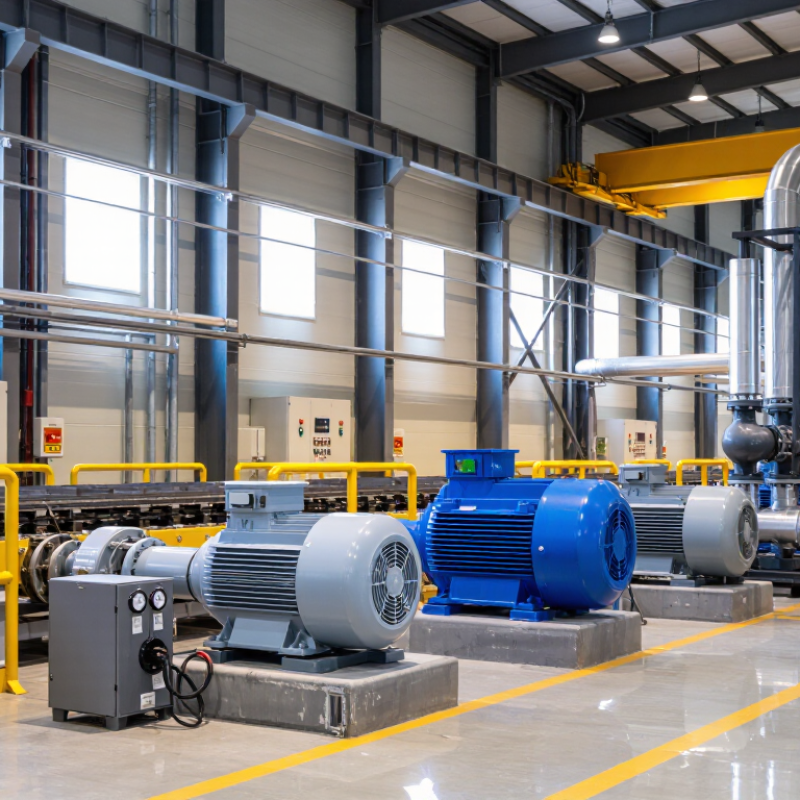
A synchronous motor is an AC motor whose rotor locks to the rotating magnetic field produced by its stator. At 60 Hz, a two-pole design has a synchronous speed of 3,600 rpm; a four-pole design runs at 1,800 rpm. The rotor’s magnetic field may come from DC excitation or permanent magnets; reluctance-based designs work differently. Unlike an induction motor, a synchronous motor ideally maintains synchronous speed as load changes, until its torque limit is exceeded. The textbook definition is clean; actual installations are less so.
The IEA’s 2011 report, Energy-Efficiency Policy Opportunities for Electric Motor-Driven Systems, estimated that motor-driven systems use about 45% of global electricity. That is a system-wide estimate, not a synchronous-motor share. Details matter. Synchronous machines can serve constant-speed duties or provide power-factor correction when properly designed and controlled. On a plant floor, their steady speed may help a conveyor keep a consistent cadence or a compressor hold a fixed operating point. Yet startup equipment, excitation systems, load profile, and maintenance also shape performance. Choosing by efficiency alone can disappoint. Measure the operating hours and torque demand.
Inside a synchronous motor, alternating current in the stator creates a rotating magnetic field. The rotor carries its own magnetic field, produced by direct-current excitation or permanent magnets. When the fields lock together, the rotor turns at the same rate as the stator field. This rate is synchronous speed: 120 times supply frequency, divided by the number of poles. At 60 hertz with four poles, that equals 1,800 revolutions per minute. No slip in steady operation. Not quite magic.
The IEA’s 2011 report, Energy-Efficiency Policy Opportunities for Electric Motor-Driven Systems, estimates that motor-driven systems use about 46% of global electricity. That figure covers motor systems overall, not synchronous motors alone. A synchronous motor can hold speed as its load changes, provided the load stays below its pull-out limit. Exceed it, and the rotor may lose synchronism. Starting also needs attention: a variable-frequency drive, damper winding, or auxiliary starter may be required. On a plant floor, check supply frequency, pole count, starting torque, and load changes—not just the nameplate. The tidy textbook picture is useful, but incomplete; efficiency depends on motor size, controls, and duty cycle.
Synchronous speed is determined by the supply frequency and the number of motor poles: Ns = 120 × frequency ÷ poles. A synchronous motor’s rotor locks to the rotating magnetic field and runs at this speed during steady-state operation.
The values show theoretical synchronous speed in revolutions per minute (rpm), calculated for common supply frequencies and pole counts.
A synchronous motor keeps its speed tied to the supply frequency, even as the mechanical load changes within its operating limits. On a pump line or compressor, that can mean steadier flow and fewer unwanted speed swings. Speed stays steady. For equipment that needs a predictable cycle, this consistency can simplify process control.
Efficiency can be a practical advantage, particularly in larger, continuously operated systems. A well-sized motor can convert electrical power effectively, while an over-excited design can improve power factor and reduce reactive power drawn from the supply. That may ease the burden on electrical infrastructure, though it does not automatically reduce every facility’s energy bill. The actual result depends on load, controls, and operating hours.
There is a trade-off. Many synchronous motors need additional starting equipment or a controlled startup sequence, and their benefits can disappear if the application runs lightly loaded or changes speed often. That deserves a closer look during selection. Check the required torque, duty cycle, supply conditions, and maintenance plan against real operating data. A motor that fits the numbers on paper may still be a poor match if the process behaves differently in daily use.
Synchronous motors suit applications where speed must remain steady under changing loads. Think of a compressor holding pressure, a process pump moving a fixed flow, or a mill turning heavy material. Their rotor speed stays synchronized with the supply frequency, helping maintain consistent operation. They can also improve power factor, especially when correctly sized and configured. That can matter at facilities with large, continuously running loads.
The scale is significant. The International Energy Agency’s 2011 report, Energy-Efficiency Policy Opportunities for Electric Motor-Driven Systems, estimated that motor-driven systems use about 46% of global electricity. The U.S. Department of Energy’s 2014 motor systems sourcebook put motors at roughly 68% of electricity use in U.S. manufacturing. These figures do not mean every plant needs a synchronous motor. Variable-speed duties may be better served by other motor-and-drive combinations. The fit is not automatic.
Synchronous motors often make sense in large pumps, compressors, fans, conveyors, and mills that run for long periods near a stable operating point. In practice, check the load profile, starting method, maintenance capacity, and power-factor targets before choosing one. A small speed variation may be acceptable—or costly. That detail deserves a site-specific review.
Why Choose a Synchronous Motor for Your Application?
Choosing a synchronous motor starts with the job, not the nameplate. It runs at a speed set by supply frequency and pole count, helping processes that need steady timing. That can matter on a paper line, compressor, or large pump where speed drift affects output. Check the load. A motor that holds speed well may still be a poor fit when frequent starts, high inertia, or rapid speed changes dominate.
Compare required torque at startup and during normal operation. Review the load cycle, expected operating hours, and whether speed must remain fixed or vary. A synchronous motor may suit continuous, steady-duty work, but starting equipment and controls can add cost and complexity. Not always. Efficiency figures alone do not settle the choice; overlooking start-up conditions is an easy mistake.
Check the available voltage and frequency, installation space, cooling, dust, and ambient temperature. Ask how the motor will start, what protection it needs, and whether maintenance staff can support its excitation and control system. If power-factor correction matters, confirm the motor’s operating range with a qualified engineer. Compare total operating and service costs, not just purchase price. Real site conditions can be messier than a tidy specification sheet.
| Selection Factor | Synchronous Motor Characteristics | When It May Be a Good Fit | What to Check Before Selecting |
|---|---|---|---|
| Operating speed | Runs at a speed determined by supply frequency and the number of poles; it maintains synchronous speed while operating in step with the supply. | Applications that need a stable, constant speed under changing load, such as certain compressors, pumps, and process drives. | Confirm required speed, supply frequency, pole count, and whether a variable-frequency drive is needed for speed adjustment. |
| Power factor | With suitable field excitation, a synchronous motor can operate at lagging, unity, or leading power factor. | Installations where power-factor correction or reactive-power support is useful alongside the mechanical load. | Assess the facility’s power-factor targets, operating range, excitation controls, and utility requirements. Power-factor benefits depend on system conditions. |
| Efficiency and load profile | Efficiency varies with motor design, rating, speed, and operating point. Some synchronous designs can offer high efficiency, particularly in suitable, steady-duty applications. | Continuous-duty equipment where energy use over the service life is an important selection criterion. | Compare efficiency data at the expected load points, annual operating hours, energy costs, and the efficiency of the complete drive system. |
| Starting and acceleration | Starting behavior depends on motor design and system configuration; some synchronous motors require auxiliary starting methods or drive-based starting. | Applications where a planned starting system can meet the required acceleration and process sequence. | Check starting torque, load inertia, acceleration time, supply limitations, starting equipment, and the impact of starts per hour. |
| Speed control | Direct-on-line operation is tied to supply frequency. A compatible variable-frequency drive can provide controlled speed operation. | Fixed-speed processes, or variable-speed processes designed around a suitable drive and motor combination. | Define the full speed range, torque demand across that range, drive compatibility, cooling needs, and any low-speed operating limits. |
| Controls and excitation | Wound-field types use a field excitation system; other synchronous designs, such as permanent-magnet types, have different construction and control requirements. | Sites with the technical capability to operate and maintain the motor’s control and excitation equipment. | Review control complexity, protection, commissioning, maintenance skills, and the consequences of a control-system fault. |
| Purchase and lifecycle cost | Initial and lifecycle costs depend on motor type, rating, excitation or drive equipment, installation, and maintenance needs. | Projects where energy performance, operating requirements, or power-factor objectives justify evaluating the complete system cost. | Compare purchase price, installation, drive and excitation costs, energy use, maintenance, downtime risk, and expected service life. |
| Environment and duty | Available designs differ in enclosure, cooling, insulation, and suitability for particular operating conditions. | Industrial duties for which a correctly specified motor can meet the site’s environmental and mechanical demands. | Specify ambient temperature, altitude, dust or moisture exposure, hazardous-area classification where applicable, load cycles, and required enclosure protection. |
It is an AC motor whose rotor stays aligned with the rotating magnetic field from its stator. In practice, startup and load conditions complicate the textbook picture.
At 60 Hz, a two-pole motor runs at 3,600 rpm; a four-pole motor runs at 1,800 rpm. Speed depends on supply frequency and pole count.
It ideally maintains synchronous speed as load varies, until its torque limit is exceeded. The limit matters.
It can help a conveyor maintain a regular cadence or a compressor hold a fixed operating point. A pump line may also benefit from predictable flow.
Some designs, when properly controlled and over-excited, can improve power factor and reduce reactive power drawn from the supply. Savings are not guaranteed.
No. Efficiency depends on motor sizing, load, controls, and operating hours. A lightly loaded motor may not deliver the expected benefit.
Compare torque demand, duty cycle, supply conditions, startup needs, and maintenance plans with real operating data. Paper estimates can miss daily variation.
It may come from DC excitation or permanent magnets; reluctance-based designs work differently. The details vary by design.
No. A 2011 report estimated that motor-driven systems use about 45% of global electricity; that figure is not a synchronous-motor share.
A Synchronous Motor is an AC motor that runs at a steady speed matched to the frequency of its electrical supply. Unlike motors whose speed can vary with load, it keeps its rotor synchronized with the rotating magnetic field in the stator. This operation allows the motor to deliver consistent, precisely controlled performance across suitable operating conditions.
Synchronous motors can offer accurate speed control, high efficiency, and—in some designs—the ability to improve power factor. These benefits make them useful in applications such as pumps, compressors, conveyors, and industrial equipment where stable operation matters. Choosing a motor requires considering the required speed and torque, load behavior, starting method, supply conditions, operating environment, efficiency goals, and maintenance needs. Matching these factors to the application helps ensure reliable performance and an appropriate overall solution.
