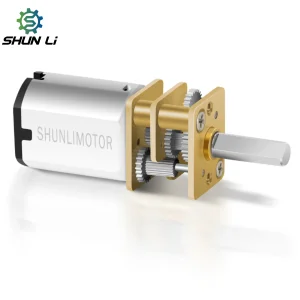
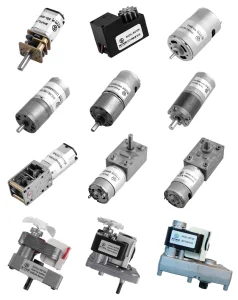
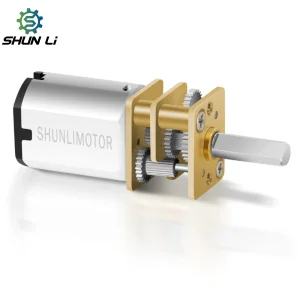
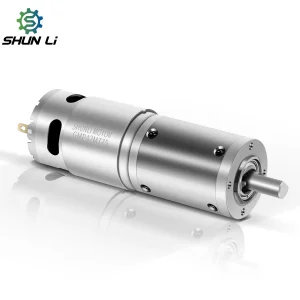
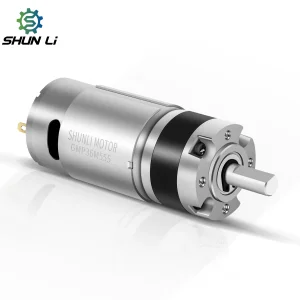
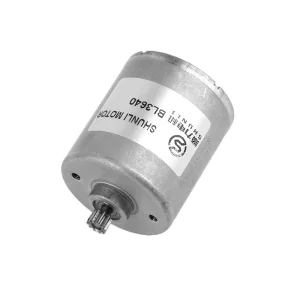

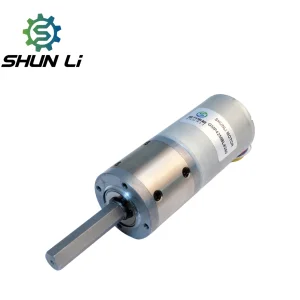
In the contemporary landscape of electromechanical engineering, the paradigm is shifting heavily toward energy density, predictive control capability, and structural longevity. MicroDyn Motor, established in 2006, stands at the frontier of this technological pivot as a specialized High-Tech China factory dedicated to engineering advanced Micro DC, Gear, and Brushless (BLDC/EC) motors.
The core ethos of our design framework rests on a fundamental law of robotics and industrial hardware: "The heart of every great machine is its motor. If the motor fails, innovation stops." For this precise reason, our engineering protocol mandates the integration of industrial-grade safety margins in winding tolerances, magnetic coercivity, and thermal dissipation pathing—ensuring dramatically higher torque, lower operational acoustic profiles, and extended life cycles compared to common commodity hardware.
Global regulatory frameworks on energy performance, notably the European Union’s Ecodesign directives and the US Department of Energy (DOE) electrical standards, are phasing out inefficient brush-commutated and legacy induction AC systems. Electronically Commutated Motors (ECMs) represent the logical culmination of combining AC line compatibility with the internal performance advantages of permanent magnet Brushless DC motors.
By shifting commutation from a mechanical contact assembly (brushes and split-ring commutators) to solid-state microprocessor-based switching, ECMs resolve the key operational bottleneck of mechanical wear. Our integrated macro-solutions cater to major industrial verticals:
To assist application engineers in making optimal architectural selections, the matrix below details the structural differences across common motor topologies:
| Parameter | Brush DC Motors | AC Induction Motors | Electronically Commutated (EC) |
|---|---|---|---|
| Average Efficiency | 60% - 75% | 70% - 82% | 85% - 92%+ |
| Service Lifespan | Short (Brush erosion ~2k hrs) | Medium (Bearing wear ~15k hrs) | Long (Over 40k hrs, bearing limited) |
| Speed Control Range | Narrow (Voltage scaling) | Limited (Frequency dependent) | Ultra-Wide (Precise PWM/FOC control) |
| Electromagnetic Interference | High (Sparking at brush interfaces) | Low | Negligible (Requires shielding for logic) |
For original equipment manufacturers (OEMs), sourcing a standardized catalog motor is rarely sufficient to meet exact mechanical envelopes or specific dynamics. MicroDyn Motor bridges this gap through a 100% custom-engineering framework. The customization pipeline involves detailed iterations across four primary parameters:
Shaft Configurations: Custom splines, internal threading, cross-bores, and materials ranging from surgical-grade stainless steel to titanium alloys to withstand high shear forces.
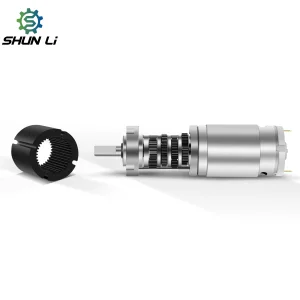
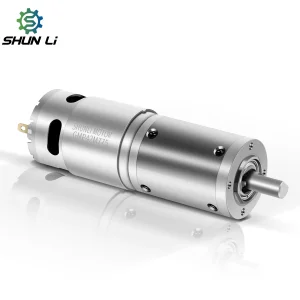
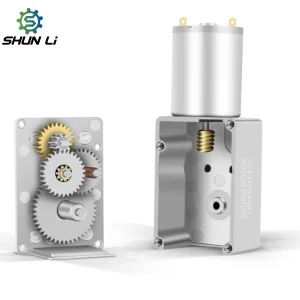
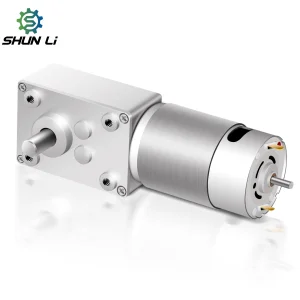
Integrated Gearboxes: Precision planetary, spur, and self-locking worm gearbox assemblies configured to optimize the trade-off between rotational output velocity and high static holding torque.
Encoder Integration: Optical, magnetic, and inductive encoders with resolution configurations ranging from basic quadrature index lines to 16-bit absolute positioning systems to ensure highly responsive control loops.
Winding Optimizations: Modifying copper gauge size and total slot fillings to tailor custom Ke (voltage constant) and Kt (torque constant) ratings to target batteries or power rails (1.5V to 48V+).
MicroDyn EC motors leverage sinusoidal field-oriented control to minimize torque ripple and noise output, ensuring smooth operation down to zero speed.
By selecting sintered Neodymium Iron Boron magnets with high thermal coercivity, our rotors resist demagnetization under heavy overload states.
Specialized high-thermal conductivity epoxy potting surrounds the stator windings to facilitate rapid heat extraction to the outer aluminum shell.
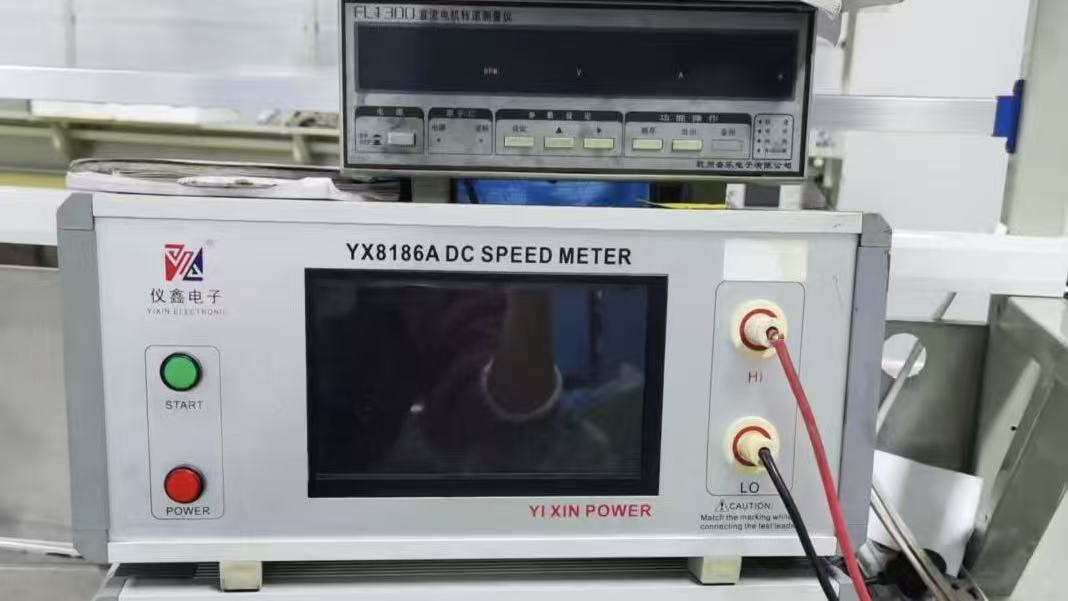
Our integrated China facility utilizes cutting-edge automated processes to deliver scale, repeatability, and consistent quality tolerances down to <5 micrometers.
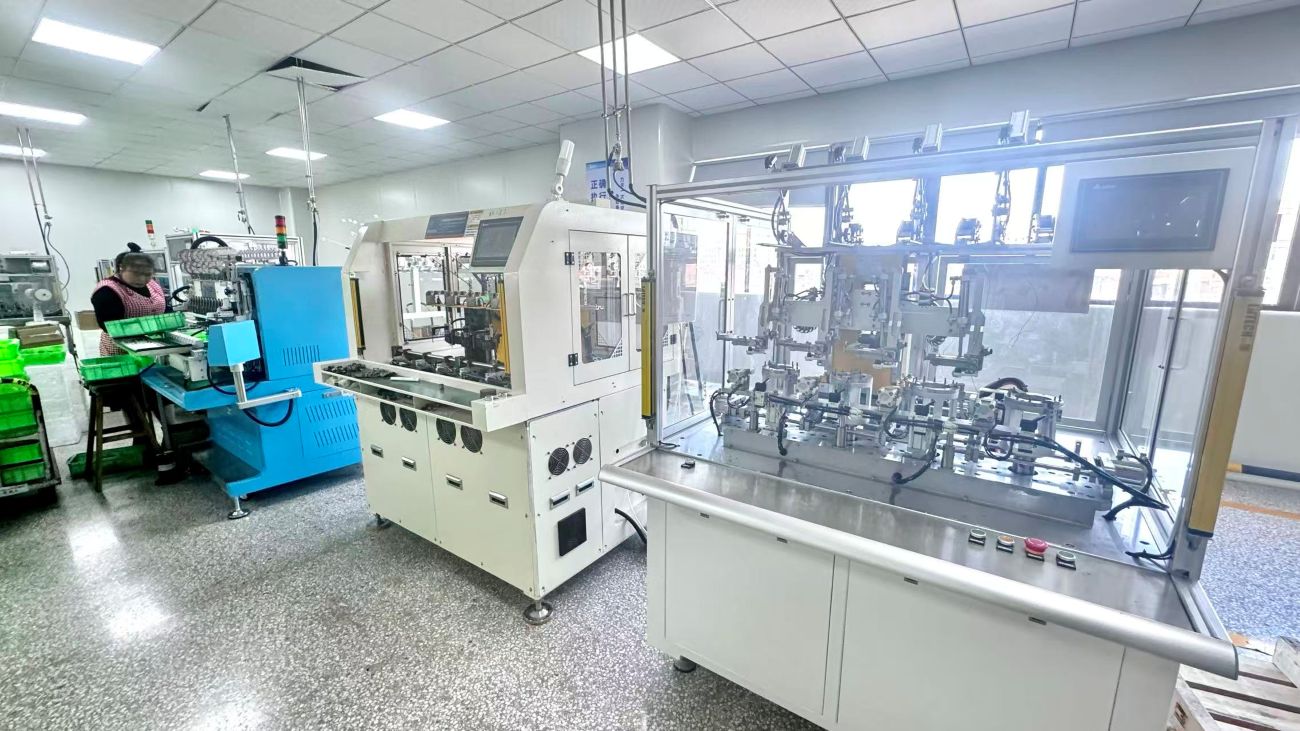
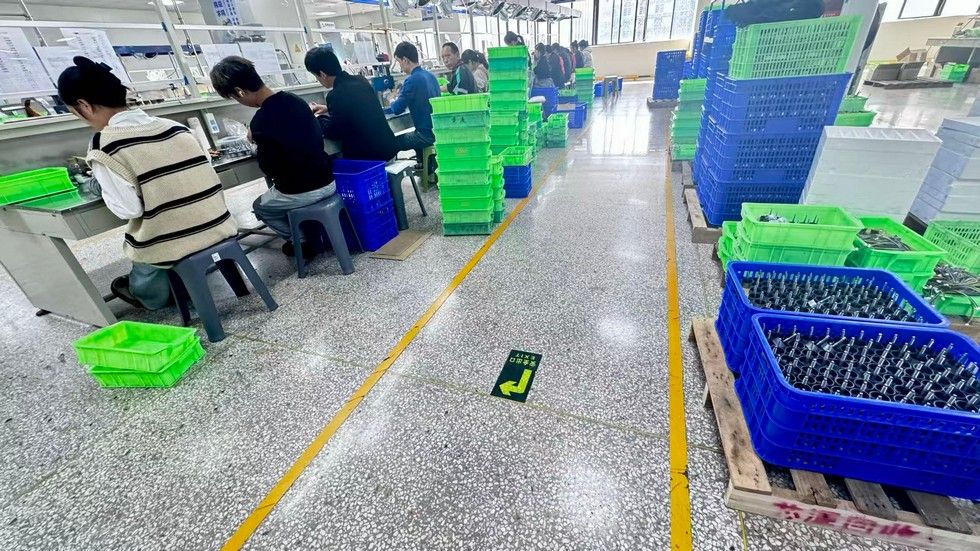
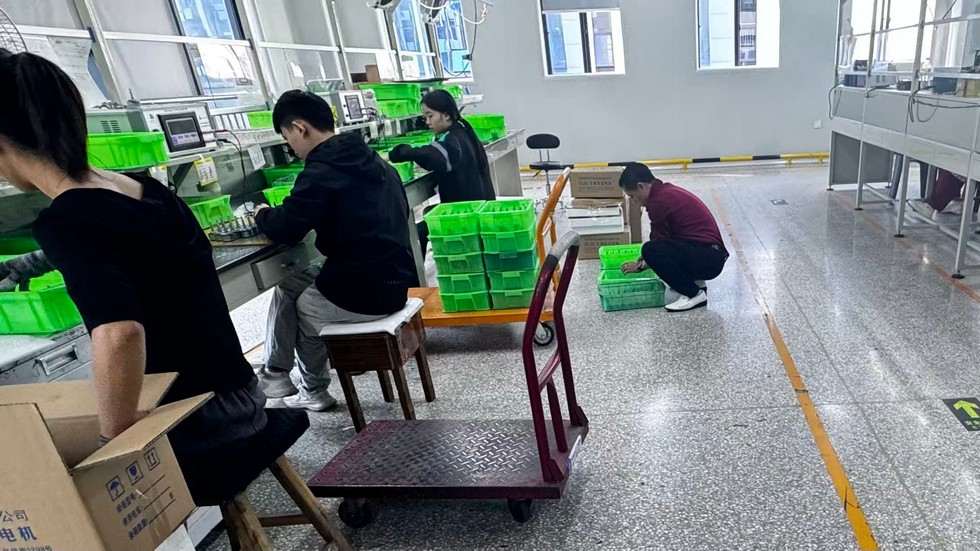

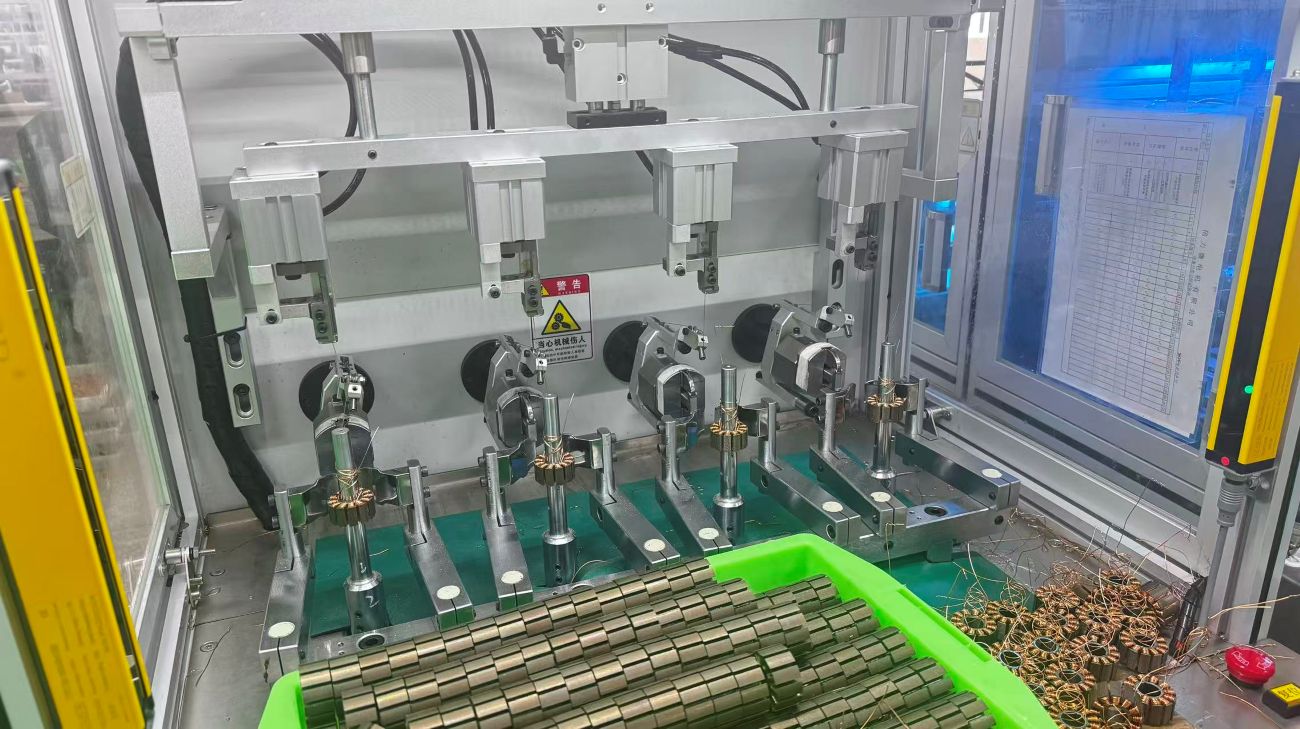
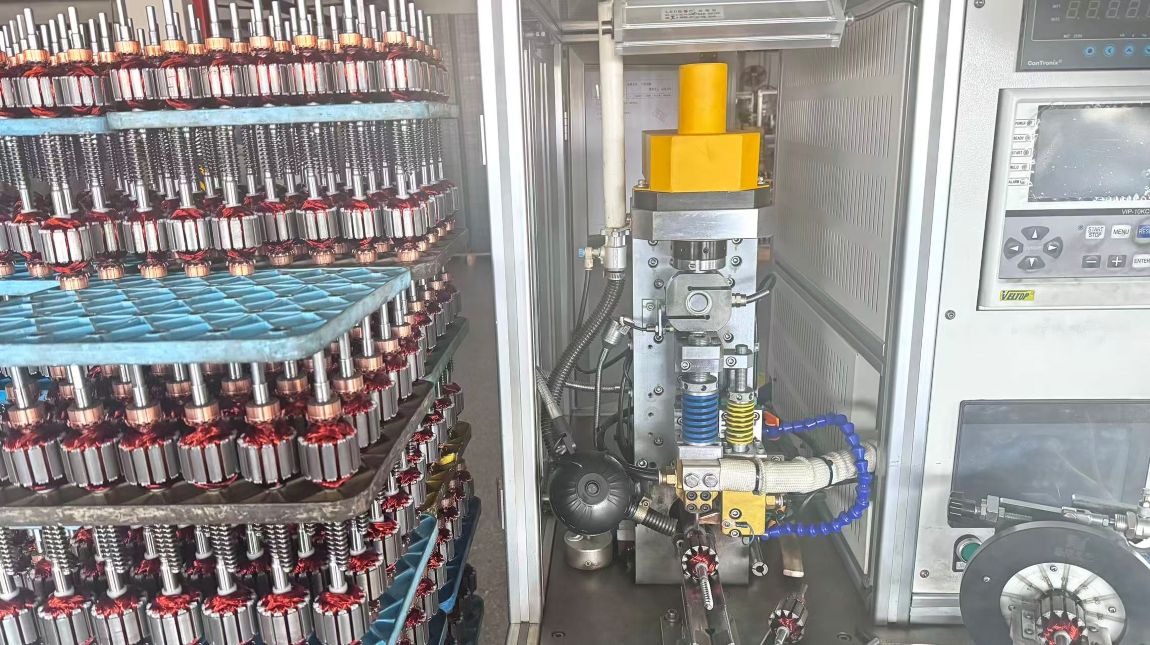
One of the primary friction points for global OEMs sourcing high-performance EC motors is regulatory and electrical integration compliance. At MicroDyn Motor, every stage of our design flow matches the structural directives of international safety boards.
Environmental Compliance: Our manufacturing processes conform strictly to the Restriction of Hazardous Substances (RoHS) and REACH directives. Our components are completely free from toxic heavy metals and restricted chemical retardants, making them safe for consumer appliance and medical deployments.
Electromagnetic Compatibility (EMC): Switching currents within EC motors can generate harmonic frequencies if poorly managed. By utilizing integrated EMI/RFI suppression filters (X/Y class capacitors and ferrite cores) in our control boards, we facilitate compliance with EN 55014 and FCC Part 15 standards.
Logistical and Technical Support: Operating with direct distribution from our manufacturing hub in China, we partner with regional engineering distributors globally to provide 24/7 technical assistance. We offer dedicated FAE (Field Application Engineering) support during prototype phases to assist with motor drive parameter tuning, sensorless startup algorithm configuration, and system commissioning.
As mechanical footprints continue to contract while torque density demands increase, the future of Commutated and Brushless Motor technology lies in two structural innovations:
By transitioning motor controller board driver stages from traditional silicon MOSFETs to Gallium Nitride (GaN) and Silicon Carbide (SiC) switches, switching frequencies can be elevated beyond 100 kHz without high thermal loss. This results in incredibly compact, integrated motor-drive assemblies where the electronic controller is embedded within the motor end-bell without thermal throttling.
Future iterations of our brushless systems will include integrated digital sensors that monitor stator temperature variations, phase-current imbalances, and acoustic anomalies. Using embedded algorithms, these modules send telemetry directly to the central industrial PLC, predicting bearing wear and mechanical degradation before critical system failures occur.
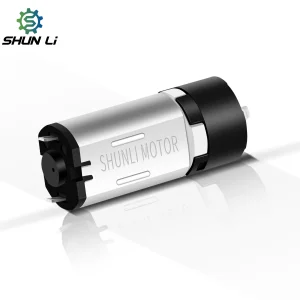
 MicroDyn Motor